
Southland couple adds value to every calf
On a fifth-generation Southland dairy farm, Suzanne and Maurice Hanning have reshaped their breeding strategy using sexed semen for the first time across the whole herd.
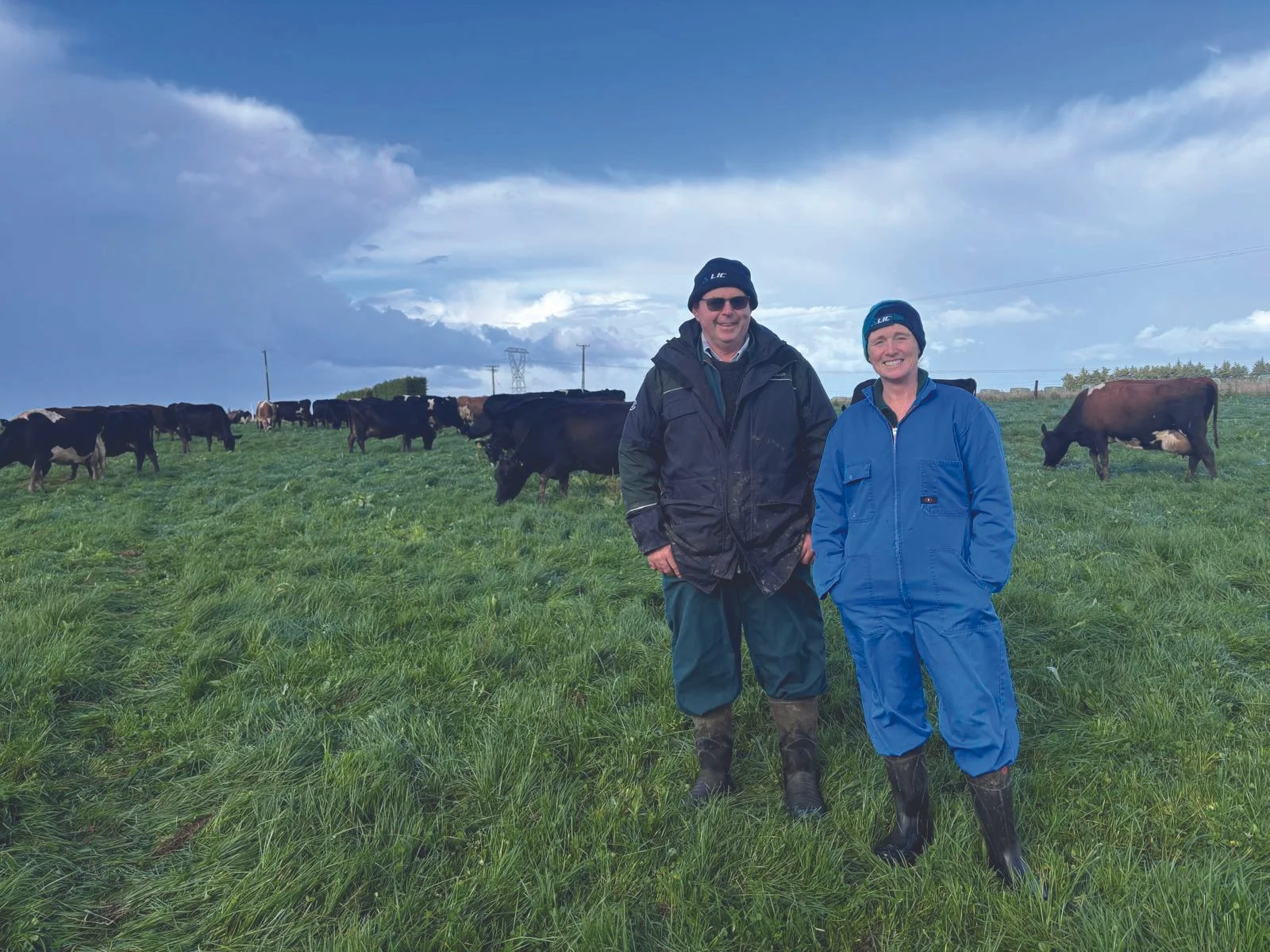
Milking around 650 cows, the Hannings run a mostly crossbred herd trending slightly toward Jersey, a balance that reflects efficiency and adaptability within their system.
For the past five years, they have quietly built confidence using sexed semen in their heifers.
Results were encouraging - promising conception rates and a consistent lift in heifer calf numbers.
But the real test came this season, when they decided to take a bigger step.
“The in-calf rates we noticed from sexed semen in the heifers were positive,” Suzanne Hanning says.
“So, we thought, let’s actually bite the bullet and try this across the herd.”
That decision marked a significant shift, not only in their mating strategy, but in how they capture value from every calf born.
The first 340 of their cows were inseminated with sexed semen, with the goal of producing around 90 per cent heifer calves from that group.
Around 65 lower Production Worth (PW) cows, or those with poorer udders, were bred to beef.
It was a calculated split, designed to lift the value of every calf while still accelerating genetic gain within the herd.
By the end of the second week of AB, they had a 64 per cent herd conception rate from using fresh sexed semen.
Remaining cows were mated to conventional semen, followed by short gestation Hereford, before Hereford bulls were introduced after six weeks to catch any cows that had been missed.
Suzanne Hanning says she worked out they would end up with around 300 non-replacement calves.
“We knew if we were going to invest more into our AB we had to make that up somewhere.
So, by doubling the value of those calves through breeding beef, that would go a long way toward covering the extra AB cost.”
But the strategy isn’t just about improvements for this season.
By breeding replacements primarily from the most fertile cows, the Hannings’ expectation is that herd fertility and calving patterns will continue to tighten over time.
It’s early days yet.
But initial data is positive with their six week in-calf rate up 9 per cent on last year.
Before mating even began, Suzanne Hanning says they focused on getting the fundamentals right.
“We revisited every single detail and aspect of our mating approach to see if there were areas we could do better.”
Body condition score was closely monitored through winter, with three-year-olds wintered separately so they could be managed more carefully.
Historically, that age group had a lower in-calf rate, so the team focused on ensuring they entered mating in ideal condition.
Other steps included blood testing for trace elements; adjusting mineral supplements, including additional iodine; and multiple round of MetriChecking after calving.
They also used heat detection patches and observed cows carefully before mating.
They also implemented a dedicated ‘picker’ system during mating which involved the same person standing on the platform every day for six weeks, identifying cows on heat.
“It sounds tedious, but if you’re spending an extra $10,000 on AB, you want to make sure you’re mating the right cows.”
Short returns were double checked, the herd was drenched with Cydectin in September, and lime flour dusting continued through to Christmas.
The Hannings also started doing Johne’s testing about four years ago.
“We stepped up doing the basics really well to support strong conception rates with sexed semen.
We prepared everything for mating so the only thing that could influence the in-calf result is the semen itself.”
Since converting back to dairying nearly 20 years ago, the couple has consistently focused on improving their herd by culling the bottom and breeding their best animals.
“The best way to genetically improve your herd is to cull the bottom,” Suzanne Hanning says.
“Ever since we've been dairying, we have taken the bottom out continuously.
We've done 25 per cent replacements and sold surplus heifer calves.”
The Hannings’ breeding focus has largely centered on Breeding Worth (BW) and trusting national breeding systems to balance multiple traits rather than chasing individual characteristics.
“When you focus too narrowly on one thing, you can lose sight of everything else,” she says.
“If companies have been focused on breeding for hundreds of years and different people have been working in those companies and trying their best all that time, there can't be too much rubbish left!”