
From farm fibre to fashion print
Strong wool is being put to use in a new way, as a Christchurch-based company partners with outdoor clothing brand Kathmandu to turn coarse wool into printing pigment for garments.
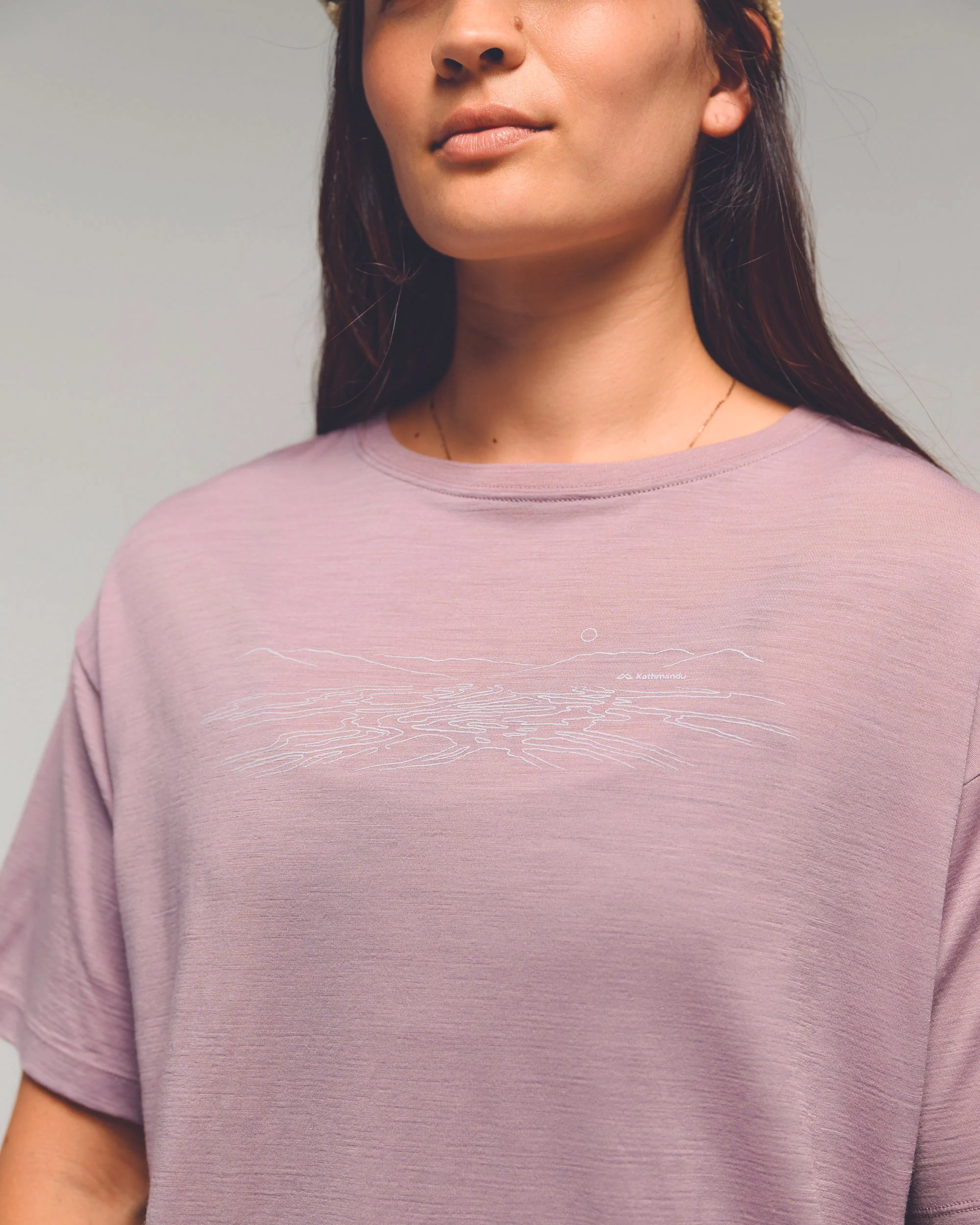
Wool Source has developed a patented process that converts strong wool into a colourant used in screen printing inks.
The innovation is being applied in a newly released graphic t shirt made from 100 per cent merino, giving wool a role not just in fabric but also in the design printed on it.
Wool Source chief executive Tom Hooper says the collaboration is an important milestone as the company takes its technology beyond the laboratory and into commercial use.
“It shows you can use our wool-based pigments in traditional commercial printing processes, at scale, and still deliver a high quality product made with more environmentally responsible materials,” Hooper says.
The pigments are derived almost entirely from renewable biological sources and provide an alternative to synthetic and fossil fuel based inks commonly used in the clothing industry.
Once converted, the wool pigment is blended into liquid inks suitable for screen printing.
Kathmandu has used the technology on a new t shirt design inspired by South Island river landscapes, linking the garment back to its natural origins.
Kathmandu head of product innovation and product sustainability Manu Rastogi says the project demonstrates how innovation can add value to natural fibres while supporting sustainability goals.
“This shows how innovation and sustainability can work together for the benefit of the industry and helps unlock new value for New Zealand strong wool,” Rastogi says.
The printing technology is the result of several years of research through a programme focused on finding new uses for strong wool.
That work involved scientists, wool growers and participants across the wider wool supply chain, with support from industry and government agencies.
For wool growers, the development offers another potential pathway for traditionally lower value strong wool, at a time when diversified markets and new applications are increasingly important for the future of the fibre.