
Unlocking the hidden value of grape marc
A New Zealand research collaboration is exploring a wide range of high-value uses for grape marc, the material left over after winemaking.
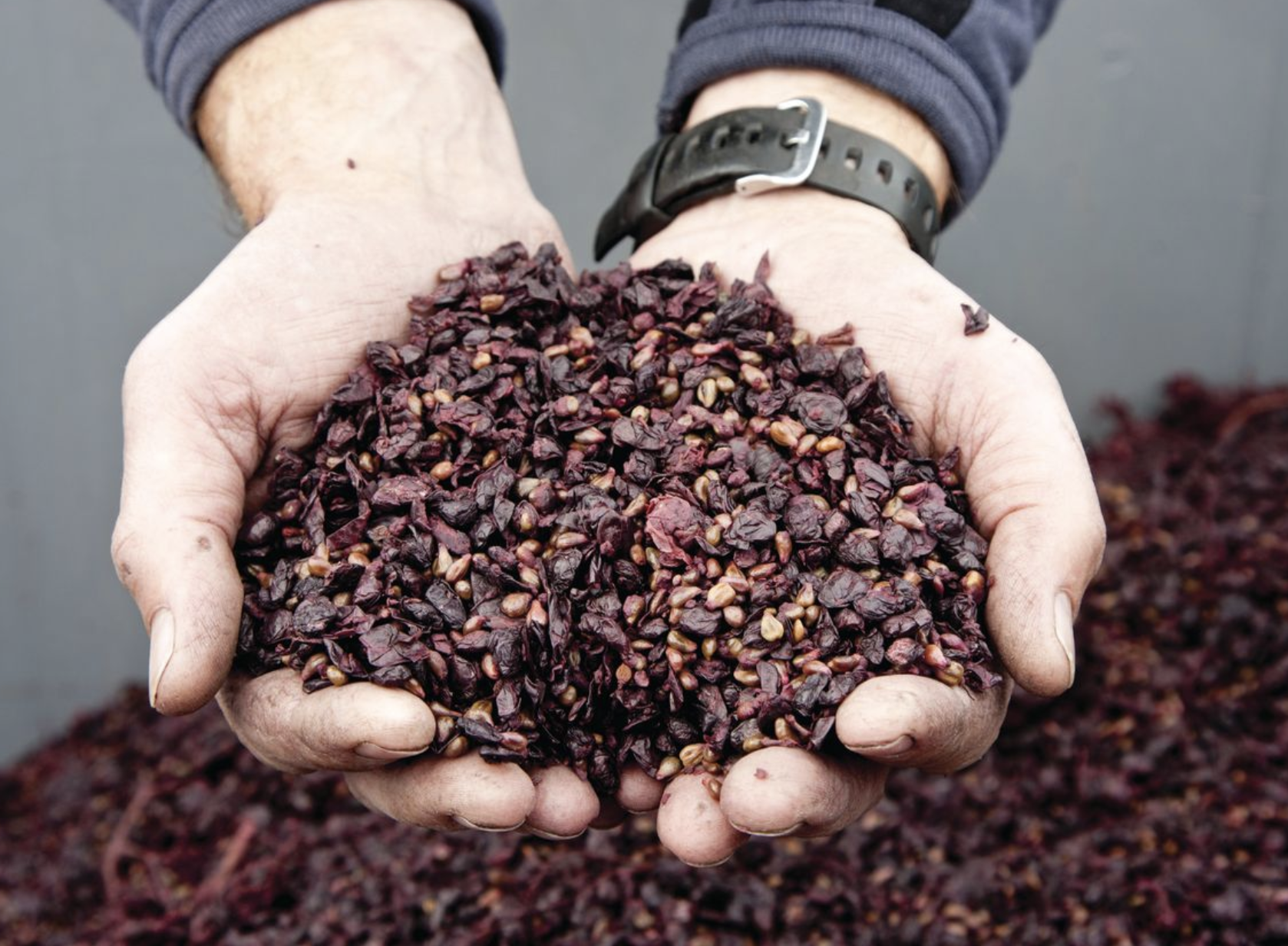
The five-year, $9.8 million dollar MBIE-funded programme, Waste to Treasure, is working to convert this rural waste product into ingredients and materials that could support new industries across food production, pharmaceuticals, building materials, and specialty chemicals.
Grape marc is currently regarded by most winegrowers as a disposal challenge, but researchers say it contains valuable compounds that can be extracted and put to work.
The team is focusing on unlocking the potential of protein, phosphorus, lignin, cellulose, anthocyanins and tannins found within grape marc.
These compounds open doors to a variety of new products, ranging from natural colourants and antioxidants to high-performance papers, feed ingredients, and fine chemical additives.
Specialty chemicals are one area of rapid development, with researchers exploring options for natural fire retardants, biobased coatings, and high-purity extracts for commercial manufacturing.
Polyphenol-based products are another key target, drawing on the strong antioxidant properties of grape skins and seeds to create food-grade ingredients and health-related formulations.
Further opportunities exist in functionalised papers made from grape marc cellulose, which could become compostable packaging, antimicrobial wraps, or environmentally friendly construction materials.
These end uses are of particular interest to rural industries looking for sustainable alternatives to existing imported products.
The Waste to Treasure team believes grape marc is a significantly underused resource with untapped value for regional economies.
By converting this abundant by-product into marketable products, the programme aims to reduce waste, create new business opportunities, and support a circular bioeconomy.
Researchers see the potential for NZ to become a leader in high-value biobased products built from the country’s existing agricultural industries.
The long-term vision is to develop processes that can be expanded beyond grape marc to other horticultural residues.
If successful, these technologies could help rural producers reduce waste disposal costs while opening up revenue opportunities from materials once considered a burden.
The programme brings together experts from the University of Auckland, Bioeconomy Science Institute, Auckland University of Technology, and the University of Canterbury to carry out the research.
Two Research Fellows, Dr Ralph Gonzales and Dr Billy Yang, have joined the team alongside nine PhD students across the partner institutions.
Additional masters and doctoral students are contributing through associated projects, ensuring a wide base of scientific capability.
The research group is also drawing on expertise from local and international collaborators to accelerate testing and development.
The Bragato Research Institute is providing links into the NZ wine sector and supporting the technical direction of the work.
Beyond these partners, the researchers are in regular communication with wine producers, biowaste operators, manufacturers, and investors who may ultimately use or commercialise the resulting products.
Industry interest has grown as companies look for ways to increase sustainability while creating value from materials previously treated as waste.
Over the first two years of the programme, a major focus has been developing extraction technologies suited to New Zealand grape marc.
Researchers have trialled and refined a range of extraction methods guided by compound yield, energy requirements, and cost efficiency.
This work has been supported by detailed characterisation of grape marc from vineyards around the country, drawing on both established analytical techniques and newer international methods.
Techno-economic assessments are underway to evaluate which processing pathways hold the strongest commercial promise.
Life Cycle Analysis is also being used to understand environmental impacts and to ensure that any proposed solutions deliver real sustainability gains for rural regions.
The Waste to Treasure programme runs through to 2028 and continues to build momentum as product prototypes are developed and tested.