
Virtual grazing equals profit for NZ farmers
An independent evaluation of the return on investment of Halter’s virtual fencing technology has confirmed measurable productivity, financial, environmental and lifestyle improvements on Kiwi dairy farms.
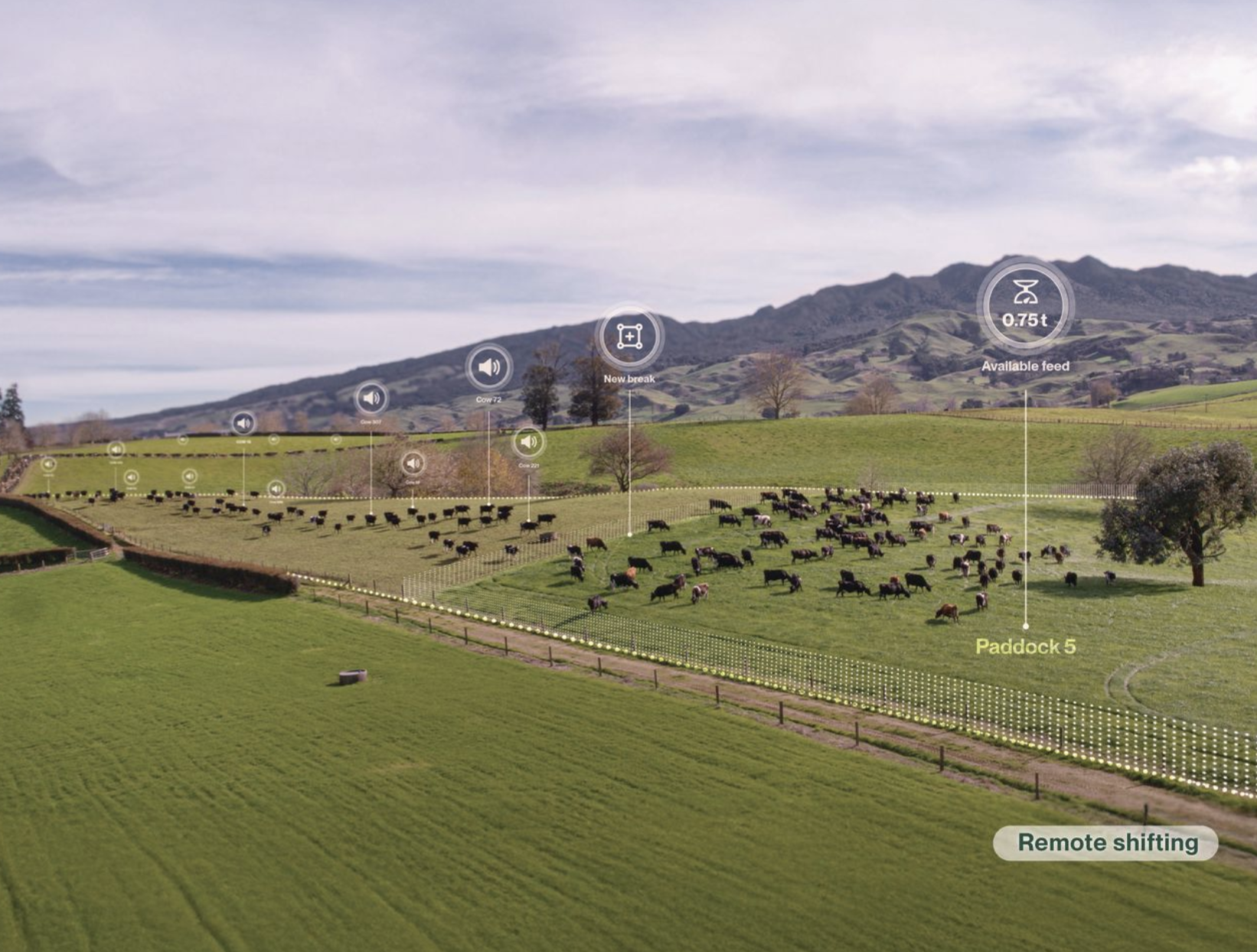
The study, conducted by farm management consultants AgFirst and Transform Agri, analysed ten high-performing farms across the North and South Islands.
Results show that, when combined with strong farm management, Halter enables significant gains in pasture utilisation, labour efficiency, animal performance, and environmental outcomes.
On average these gains resulted in an increase in farm profit before tax of more than 13 per cent.
Key Findings:
Profitability: Farms recorded an average 13.2% increase in profit before tax (EBIT). Most farms saw double-digit gains, with one achieving an increase of 37%.
Pasture & Production: On average, farms harvested 8.9% more pasture and produced 9.5% more milk solids per hectare.
Reproductive Performance: Six-week in-calf rates improved by 4.7%, while empty rates reduced by 2.1%.
Labour Efficiency: Several farms reduced staffing needs or hours worked, freeing time for higher-value tasks. Staff reported less fatigue, shorter workdays, and improved job satisfaction.
Animal Health & Welfare: Farmers reported earlier detection of health issues and smoother calving management. Reduced stress on animals contributed to better recovery post-calving.
Environmental Benefits: Farms reduced nitrogen use, improved crop utilisation, and were able to exclude environmentally sensitive areas from grazing during adverse conditions.
Staff across all farms also highlighted improved work-life balance, with more predictable rosters and less repetitive manual work.
Freed-up time allowed teams to focus on monitoring, planning, and animal care.
From a recruitment perspective, several farms noted that Halter has made farming roles more attractive to new, tech-savvy employees.
Ag First CEO James Allen says the impact of Halter largely depends on the ability of a farm to utilise the information and technology into decision-making and management.
“What these farms show is that Halter can enable significant gains to be made by effectively optimising the farm’s resources. Halter helps build more sustainable, resilient, and productive dairy businesses.’’
Halter’s head of corporate accounts and partnerships Steve Crowhurst says the results of the study align with feedback Halter receives from farmers.
“The findings reflect what farmers tell us: when paired with good management and a willingness to change how they farm, Halter increases profitability. Our technology helps farmers be more efficient with their pasture, make more informed decisions, and create more balanced, sustainable rosters.’’
Crowhurst says he’s pleased to see the higher returns even on farms that were already performing above regional averages.
“We chose these farms because they’re high-performing, and we wanted to capture this new level of farm performance that could be achieved with Halter and share those learnings with the industry.
“We’re keen to extend these studies and get an even longer-term view of the positive impacts Halter can have on dairy and beef systems.’’