
Meet the next step inglyphosate-resistantryegrass control
Richard Barnes, Coles Contracting viticultural operations manager, knows the wine industry in New Zealand and Australia like the back of his hand.
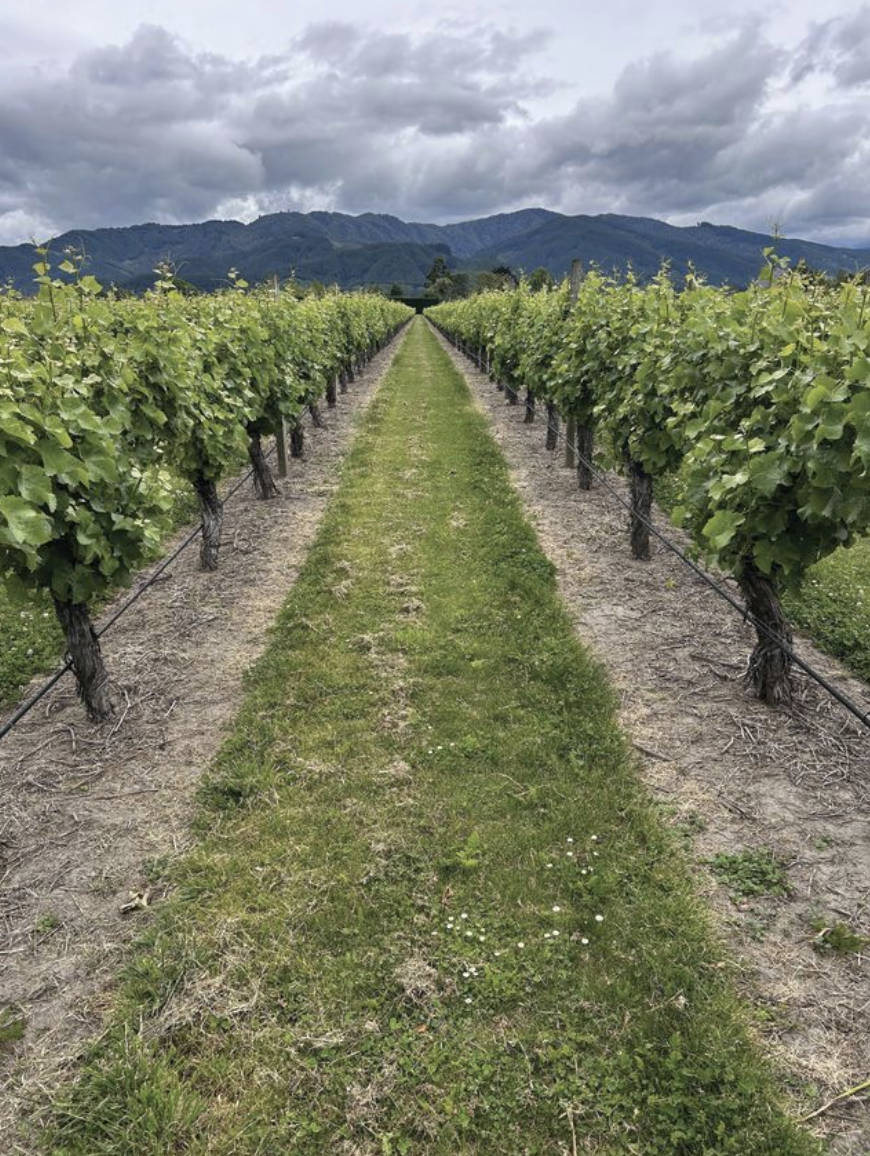
Marlborough-based, he works with people with vineyards ranging from 3 hectares to over 100 hectares.
“It’s a very dynamic business.”
Barnes has managed blocks with glyphosate resistant ryegrass, but it wasn’t a big step up as he’d previously encountered the issue in Australia.
He’d tried other herbicides, before Katana, with varied success.
“Often it added extra passes.”
He says he applied on the SWNZ website to use Katana on a block that had glyphosate resistant ryegrass.
“It was an easy process. We applied Katana pre bud burst and found its five-month residual effect cut out an extra herbicide pass. “It was successful and the client was happy.”
Containing 250 g/kg flazasulfuron in the form of a water dispersible granule, Katana provides long-term residual control of problem weeds.
UPL NZ regional manager upper South Island, Alex Easton, says Katana’s results are exciting. “It’s going to be massive in terms of savings on fuel and staff time as it can provide control for up to five months.
“Long-lasting efficacy means vineyards can focus labour and resources on other jobs. Katana also has a long and flexible application window, and we’ve seen it work well in some tough conditions.”
In feedback from a reseller, a client reported using Katana immediately after registration, with impressive results on resistant ryegrass and other weeds.
“It can save one to two passes of spray. Some results have been really outstanding. The following year, growers have also found the weed pressure was decreased.”
Rapidly absorbed by roots and shoots, Katana inhibits Acetolactate Synthase (ALS), a key enzyme of base amino acid production.
As a result, downstream synthesis of vital plant proteins is stopped, and the plant dies. When used on germinating seedlings, Katana acts in the soil to prevent further plant growth and emergence.
Katana is a residual herbicide.
As such the soil needs to be clear of significant plant material before using it.
If weeds are present it can be mixed with a knockdown herbicide.
If weeds are significant, apply a knockdown herbicide first, then use Katana once weeds have collapsed.
More than 15 Katana trials were conducted in Marlborough, Hawke’s Bay and Gisborne throughout 2016-2021.
In addition, pot trials were carried out at Massey University to confirm its efficacy on glyphosate resistant ryegrass.
Glyphosate remains one of the most widely used herbicides in NZ and can be mixed with Katana.
Prior to use SWNZ members must apply for written permission before using Katana.