
As of last month, New Zealand farmers can once again buy phosphate mined in their own country.
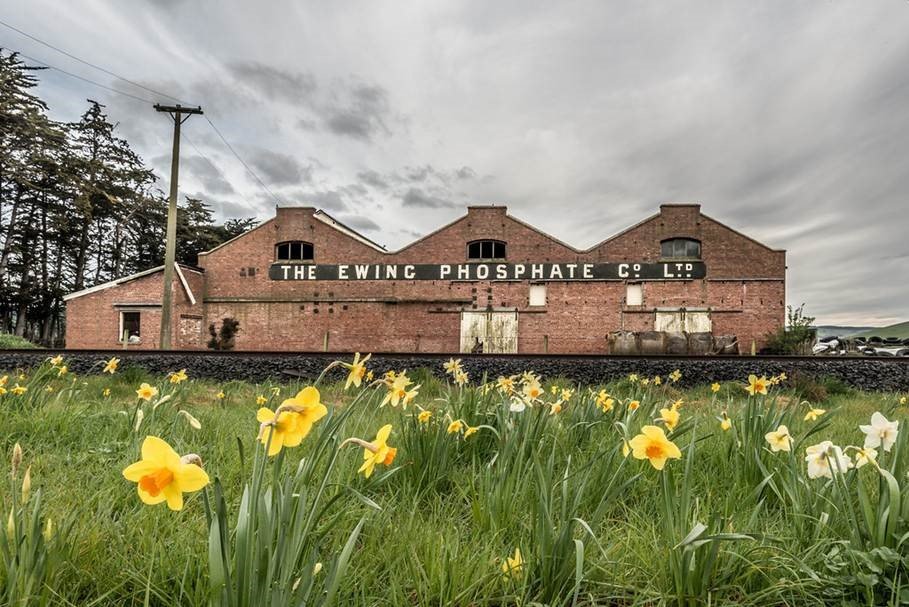
L&M Group has launched Kiwiphos, a direct application phosphate rock extracted from the Clarendon deposit about 35 km south of Dunedin.
It is the first significant New Zealand-mined phosphate available to local farmers in over 80 years.
New Zealand currently imports all of its phosphate. In 2021 it imported 689,000 tonnes, making it the world's ninth-largest importer, with 51% coming from Morocco, 25% from Togo and 9.4% percent from China.
L&M says Kiwiphos gives farmers a domestically produced alternative with a shorter, more secure and locally accountable supply chain.
The Clarendon deposit was discovered in 1902. Small quantities of phosphate were mined there until 1924.
Mining resumed during the Second World War when imports were limited, and about 53,000 tonnes were extracted between 1942 and 1947.
The site then sat idle for more than 80 years.
In recent years L&M Group has been carrying out exploration for phosphate in a large area between Balclutha and Kaikoura on the east coast of the South Island.
As part of this exploration it extensively researched the Clarendon site to confirm the extent and quality of the deposit.
Mining restarted in 2026, and the first crushed Kiwiphos product has now been produced.
Located beneath Fort Hill near State Highway 1, Clarendon is the largest known phosphate deposit in New Zealand.
It formed about 25 million years ago on the sea floor and was later lifted above sea level by tectonic movement.
The group's research to date indicates it contains a multi-million tonne deposit of phosphate ore with grades ranging between 5% and 15% phosphorus.
Group Project Manager and geologist Dave Manhire says for most of the last century New Zealand farms have relied on phosphate shipped from the other side of the world.
“Kiwiphos changes that. It is mined here, it stays accountable here, and it supports the New Zealand economy rather than overseas supply chains.”
The first product, Kiwiphos 6, is a direct application phosphate rock designed to maintain long-term pasture production and is typically blended with other nutrients to suit each farm.
It is 100% natural with no chemical additives and is certified by BioGro NZ as an input allowed for organic production.
Manhire says it is waterway safe because it is slow-release with no undesirable leaching into waterways.
On soils with pH 5.8 or below the rock dissolves slowly and consumes soil acidity, which offsets lime requirements.
Long-term pasture yields are expected to reach at least 95%t of those achieved with reactive phosphate rock or superphosphate, assuming other required nutrients such as sulphur are applied.
Kiwiphos 6 contains 5% to 7% phosphorus, around 1% potassium, around 10% calcium and around 20% silica, with citric solubility above 30%.
It can be applied as a heavier dressing every three years or so, as a heavy application followed by annual maintenance, or mixed with soluble phosphate.
An independent study for the Sustainable Phosphate Futures for New Zealand project, funded by the Our Land and Water National Science Challenge, found New Zealand-sourced phosphate rock can be supplied at a cost competitive with imports.
Shipping makes up 64% of the greenhouse gas footprint of superphosphate made from imported rock.
The same study estimated superphosphate made from New Zealand rock would produce about half the emissions of the imported equivalent.
Testing of the New Zealand deposits found cadmium and uranium levels generally below detection limits.
Where cadmium was recorded it was below the fertiliser industry's voluntary limit of 280 mg per kg of phosphorus.