
Billions of hort income rides on rocky roads
A new report reveals New Zealand's horticulture sector depends heavily on a mere handful of inter-regional routes for transporting produce worth billions.
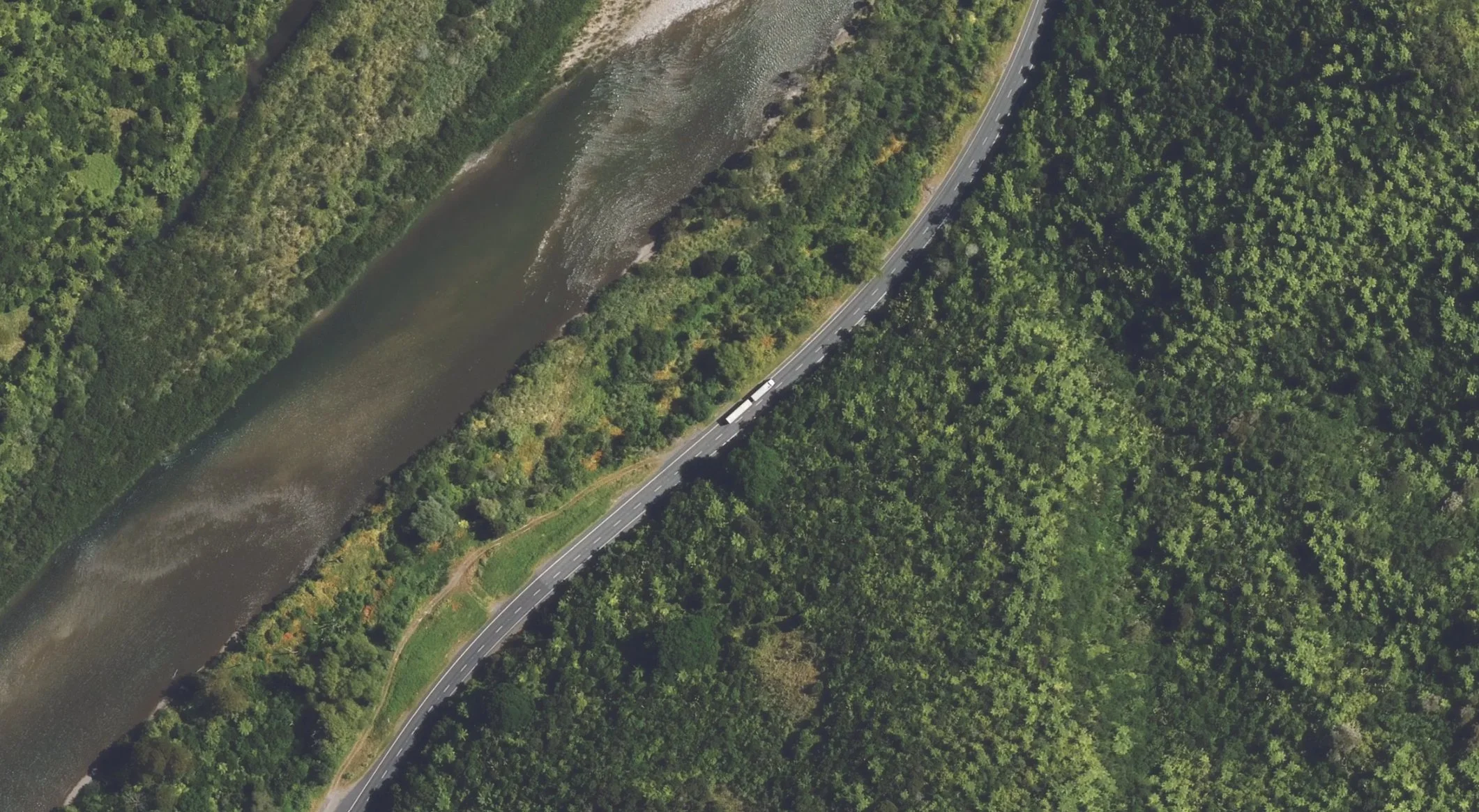
The analysis by Infometrics and EC Consult was commissioned for the Aotearoa Horticulture Action Plan and spans each stage of the supply chain.
It estimates 23 per cent of horticultural produce moves between regions for packing or distribution, totalling 553,800 tonnes a year.
The top nine inter-regional movements each support over $50 million in produce value.
Together they account for 89 per cent of such flows totalling $1.376 billion.
For example, the flow between Waikato and Bay of Plenty is worth $238 million.
Northland to Auckland follows at $224 million.
Hawke's Bay to Auckland is valued at $215 million, and Otago to Canterbury comes in at $179 million.
These routes highlight vulnerabilities in the supply chain, report authors note, because most produce is transported by road.
They say significant detours would be needed if key highways like State Highway 5 from Napier to Taupo or State Highway 2 from Gisborne to Opotiki were unavailable.
As of mid March, the Waioweka Gorge on SH2 was still under daytime stop/go control after being closed entirely for three weeks following severe weather in January.
The gorge remained closed at night, and NZ Transport Authority says recovery work will take months.
This one route supports up to $112 million of horticultural produce movement out of Gisborne.
Meantime, Waikato roads alone transit 50 per cent of inter-regional produce movements.
The 'golden triangle' of Auckland, Waikato and Bay of Plenty concentrates production, packing and distribution.
Bay of Plenty and Hawke's Bay are the largest growing regions, with the former producing $4.1 billion of produce from 14,200 hectares, and the latter, $1.3 billion from 17,200 hectares.
Overall the sample covers 24 products worth $7.97 billion from 2.4 million tonnes and 69,600 hectares planted.
Kiwifruit dominates at $4.9 billion from 828,000 tonnes.
Apples and pears add $1.7 billion.
The report warns perishability makes the sector sensitive to delays.
For many crops the post-harvest window to packhouse is critical - often just a matter of hours.
Disruptions from road closures, extreme weather, ferry issues, or port congestion could cascade into losses, making reliable transport essential to maximise value.
The analysis used Stats NZ data and surveys from 14 product groups covering 66 per cent of horticultural production.
Data collection challenges included commercial sensitivity and supply chain complexity.
Kate Scott, chief executive HortNZ, says the report is a valuable source of evidence to support regional and national infrastructure investment decisions.
“It will also help the sector to advocate for resilience improvements for the infrastructure that is most vulnerable and rapid repair when critical infrastructure does fail.”
NZ Fruitgrowers Charitable Trust and HortNZ funded the report.