
With forecasters again talking about El Niño conditions and the prospect of a drier than normal summer, forage brassicas are likely to play an important role in helping livestock farmers bridge feed gaps.
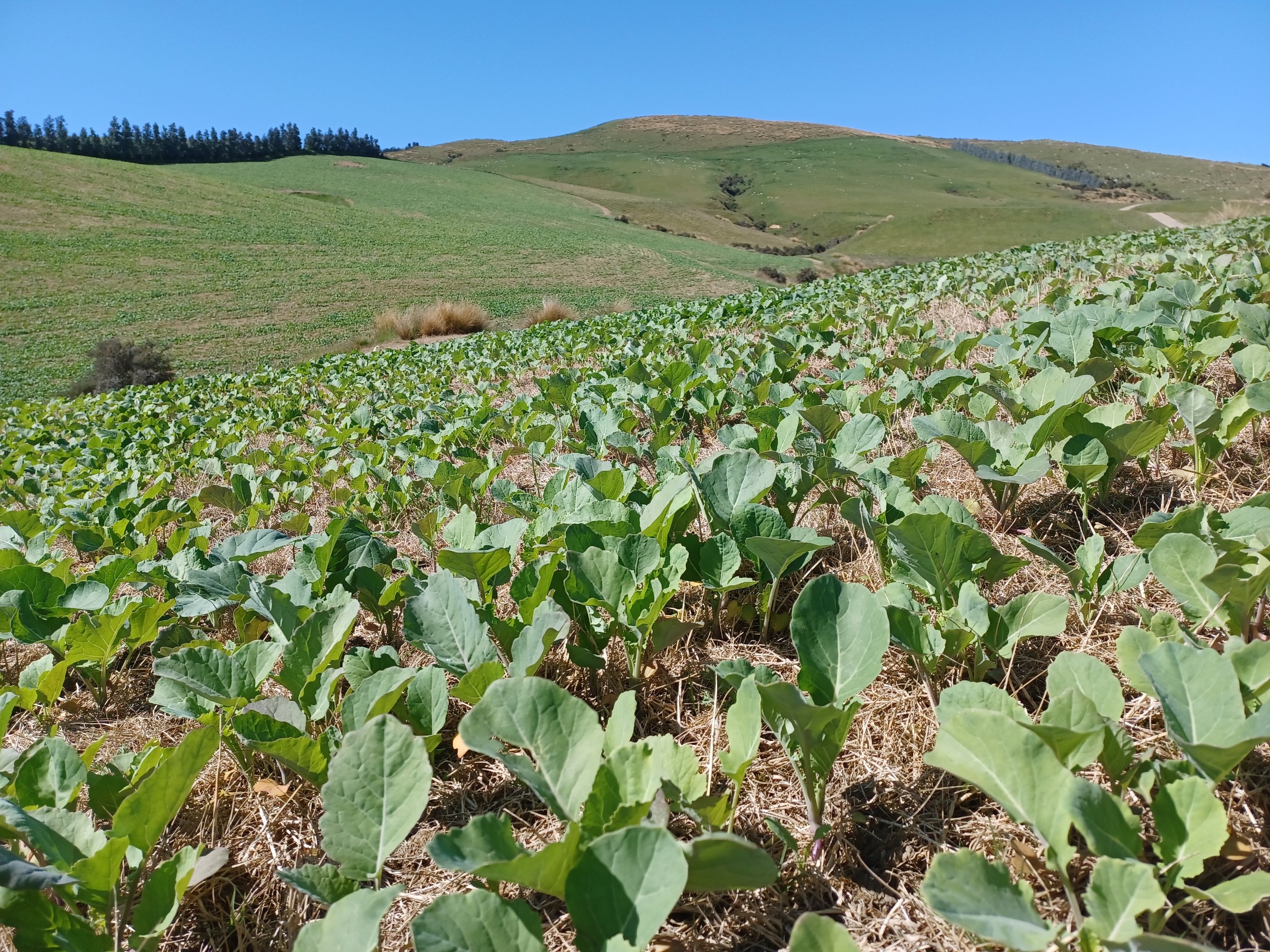
For rural retailers and merchants, that creates an opportunity to revisit the crop protection programmes that underpin reliable brassica yields.
According to Huw Murray, Territory Manager with Corteva Agriscience, the company's forage brassica portfolio is built around three key products designed to tackle some of the biggest threats to crop performance from establishment through to grazing.
"The easiest way to think about it is that growers are effectively banking spring moisture through those brassica crops so feed is available later in summer," says Murray.
"To get the full benefit of that investment, they need to keep weeds from stealing moisture, as well as nutrients and light, and insects from impacting plant population and plant health."
On the weed control side, Corteva is highlighting both Korvetto and Milestone for post-emergence use in forage brassicas.
Korvetto has carved out a niche for its activity on some difficult brassica weeds, particularly shepherd's purse and fumitory.
Murray says the product performs best when shepherd's purse is treated early, typically before it progresses beyond the three to four leaf stage.
At that growth stage, Korvetto can provide strong control, whereas larger plants are more likely to be suppressed than eliminated.
He also points to fumitory as another species where Korvetto can be particularly valuable, especially where weeds have escaped pre-emergence programmes.
Milestone, meanwhile, remains a useful tool for tidying up a broad spectrum of weeds across forage brassica crops.
Murray says species such as willow weed or redshank are among its strengths, although, as with most herbicides, timing remains important.
Applying products when weeds are still small not only improves performance but supports good stewardship practices as well.
Insect control is another area attracting attention as some older chemistry options become less widely available.
Corteva’s newest offering, TwinGuard, combines the active ingredients found in Sparta and Transform to deliver broad spectrum control across multiple pest groups.
The product targets pests including Nysius, diamondback moth, white butterfly, looper caterpillars, leaf miner, aphids and springtails.
It also combines two modes of action, Group 4C and Group 5, and can be used from crop establishment through to the end of the crop cycle.
That broad activity is especially relevant as growers adapt to a changing insect management landscape.
"With fewer organophosphates available than there once were, some pest challenges are becoming more significant," says Murray.
"The message is to monitor crops closely and use the newer tools responsibly, so they remain effective for the future."
Regular crop walking remains central to that approach.
Early identification of both weeds and insect pests allows agronomists and retailers to recommend the most appropriate interventions while populations are still at manageable levels.
Early monitoring and timely action are among the biggest drivers of successful forage brassica performance, Murray says.
The stakes can be high. Summer turnips, rape and related forage brassica crops are capable of producing around 8-10 tonnes of dry matter per hectare, providing valuable feed when perennial pasture growth slows or stops during dry conditions.
For rural professionals, Murray says, the forage brassica conversation is about more than individual products.
It’s about helping customers protect a feed source that may be carrying significant value through summer and autumn.
As Murray puts it, whether conditions turn wet or dry, healthy crops are generally the highest yielding crops, making effective weed and insect management an important part of getting the most from every hectare sown.