
We can’t drench our way out of internal parasite challenges
Words: PGG Wrightson Seeds
For more than 60 years anthelmintics (drenches) have been the backbone of internal parasite control in sheep.
However, worm resistance to these drenches is becoming increasingly prevalent with over one-third of NZ sheep farms now carrying worms resistant to triple combination drenches.
There are several management strategies farmers can adopt to help slow the development of resistance on farm.
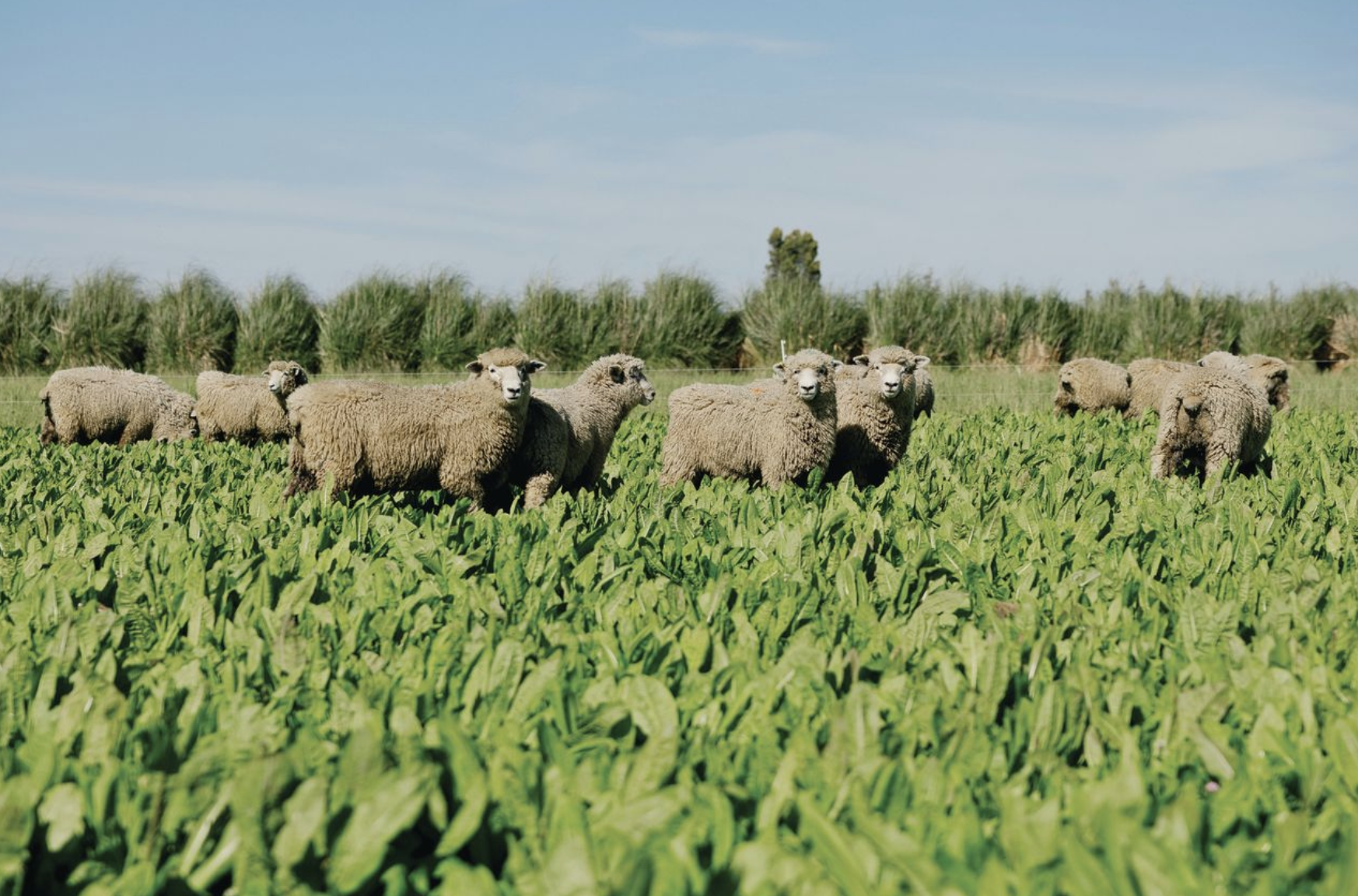
One practice that is growing in popularity is implementing forage crops into farm systems for growing young stock.
Forage crops have traditionally been used on farm for their agronomic advantages during periods of poor pasture growth, but recent research has proven certain forage species can also slow the accumulation of internal parasites in young stock leading to reduced requirement and frequency of drenching.
PGG Wrightson Seeds (in collaboration with PGG Wrightson) conducted six grazing studies between 2023 and 2025 to understand the interaction between lambs and young cattle grazing forage crops and their accumulation internal parasites over time.
Each trial involved weekly weighing and monitoring faecal egg counts (FEC) to measure animal liveweight gain and test how long lambs or calves could graze a certain crop following an initial effective drench, before they reached a designated FEC threshold for drenching.
Several forage crops were tested across the six trials including Pallaton Raphno brassica, Sika chicory/clover and Ecotain environmental plantain/clover mixes against a perennial pasture control.
Across all six trials, lambs or calves grazing Pallaton Raphno brassica had very low FEC, not reaching the threshold for drenching (up to 70 days following an effective drench).
Sika chicory and Ecotain clover mixes also proved successful in reducing the frequency of drenching requirement on farm.
In comparison, lambs or calves grazing perennial pasture exceeded the FEC threshold for drenching after only five weeks reinforcing the reasoning behind traditional monthly drenching practices on farm.
Why do certain forage crops reduce the frequency for drenching?
Forage crops act as an internal parasite circuit breaker, reducing the number of infective L3 larvae that young stock ingest leading to a slower reestablishment of internal parasites within the animal.
The key to success is crops removing the infective L3 larvae’s natural habitat.
L3 larvae thrive in warm, moist environments such as those found in dense ryegrass or browntop swards, with the majority living in the bottom 2.5 cm of pasture.
Beneath crops, infective L3 are sensitive to desiccation by sunlight (UV) and dry conditions and crop plant architecture of some forage species can also reduce larval survival.
L3 larvae move with moisture and have a poor ability to move vertically within a crop.
The exposed microclimate and taller height of forage crops make it harder for larvae to survive and enter the crops grazing zone.
Good agronomy is still important, particularly broadleaf and grass weed control.
Weeds, including unsown areas of paddocks. provide an environment for internal parasites to survive and increase the risk of L3 ingestion by lambs and calves.
Further research this past season has investigated if lambs can remain largely free of worms for up to six months following initial treatment with an effective drench.
Faecal egg counts from ewe lambs grazing Pallaton Raphno and Cleancrop Sarge kale remained low for six months, and lamb liveweights were significantly heavier compared to ewe lambs that grazed perennial pasture.
More brassica-fed lambs reached target hogget mating weights compared to lambs grazing pasture.
The same principals for crops and internal parasite can be extended to facial eczema control.
In a 2026 North Island study, lambs that grazed Pallaton Raphno or Sika chicory maintained lower faecal spore counts than pasture-fed lambs, demonstrating that crops can be protective not only against internal parasite burden, but also facial eczema.
For further information about these trials or how forage crops in general can help manage internal parasites please see the new Internal Parasite Management Guide available at pggwrightsonseeds.com