
Water quality can make or break spray performance
Words: AgNova
Many growers spend plenty of time choosing the right herbicide, adjuvant and application timing, but one of the most important ingredients in the spray tank is often overlooked.
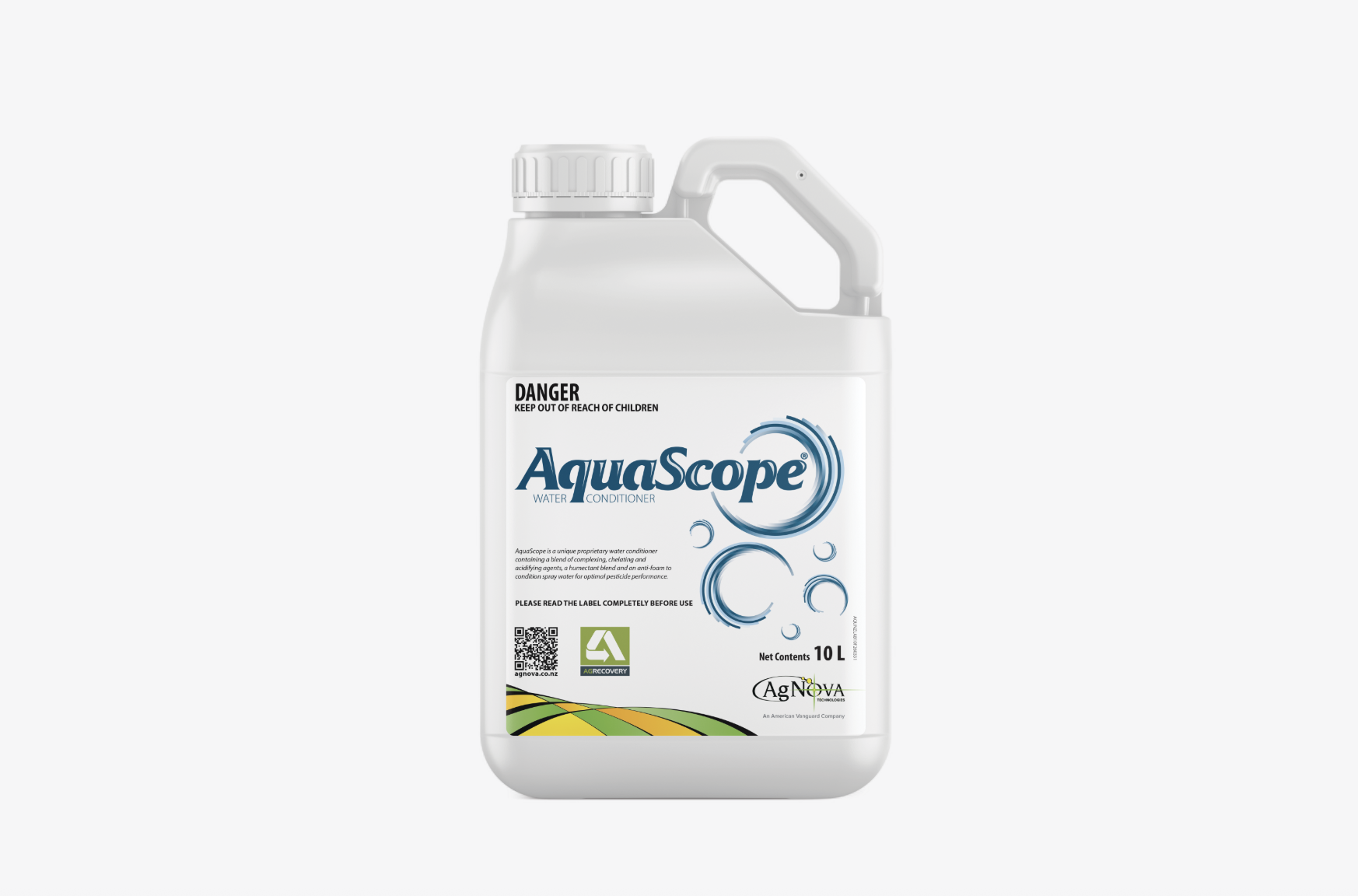
Water quality can have a major impact on the effectiveness of pesticides, particularly herbicides such as glyphosate.
AquaScope was developed in the United Kingdom to address two common problems that can reduce spray performance.
Hard water and high pH levels can both interfere with pesticide activity, potentially reducing weed control and increasing the risk of herbicide tolerance or resistance developing over time.
The challenge for growers is that water quality issues are not always obvious.
Water that looks clean can still contain significant levels of dissolved minerals such as calcium, magnesium, iron and manganese.
These minerals are positively charged and can quickly bind with negatively charged herbicides, reducing the amount of active ingredient available to control weeds.
According to the AquaScope technical information, hard water can reduce the effectiveness of a range of weak acid herbicides, including glyphosate, glufosinate and several common broadleaf weed control products.
Rather than allowing these minerals to react with the herbicide, AquaScope is designed to bind with the dissolved cations first, protecting the pesticide from deactivation.
The product also addresses another important issue in spray water, namely pH.
Many pesticides perform best in slightly acidic to neutral conditions.
When spray water becomes too alkaline, active ingredients can begin to break down through a process known as alkaline hydrolysis.
This means some of the chemistry can lose effectiveness before it even reaches the target weed.
AquaScope works by buffering the spray solution to a more favourable pH, helping to protect susceptible pesticides from degradation.
It can also help reduce the effects of dissociation, another pH related process that can lower the effectiveness of certain herbicides.
Water quality varies considerably between farms and even between different water sources on the same property.
Seasonal conditions, changes in groundwater levels and storage methods can all influence hardness and pH.
Water stored in concrete tanks, corrugated iron tanks or delivered through irrigation systems may have different characteristics that affect spray outcomes.
For that reason, AgNova encourages growers to test rather than guess.
Measuring Total Dissolved Solids, commonly known as TDS, provides an indication of water hardness and can be done in less than a minute using a handheld meter.
Regular testing helps identify changes throughout the season and enables growers to adjust their water conditioning programme accordingly.
The cost of ignoring water quality can be significant.
The technical information notes that glyphosate performance can be reduced substantially in hard water conditions.
Even relatively small losses in efficacy may contribute to poorer weed control and increase the risk of resistance development through unintended underdosing.
Beyond water conditioning, AquaScope includes additional features aimed at improving spraying efficiency.
The formulation contains humectant properties that help spray droplets remain in a liquid state for longer.
This is particularly important for water soluble herbicides such as glyphosate, which require time on the leaf surface before they can be absorbed into the plant.
Fast drying conditions can leave active ingredients stranded as crystals on the leaf surface, reducing uptake and overall performance.
The product also incorporates an anti foam agent.
Foam can slow filling operations, create handling issues and increase the potential for product wastage.
By controlling foam formation in the tank, growers can fill more efficiently and maintain accurate spray concentrations.
A key recommendation is to add AquaScope to the spray water before pesticides and other adjuvants.
This allows the product to condition the water first and deliver its full benefits throughout the spray mix.
Combined with regular testing and attention to water quality, the approach aims to help growers get the most from every litre applied.