
Farmers in Mid Canterbury are embracing technology to tackle one of agriculture’s biggest environmental challenges - nitrate in waterways.
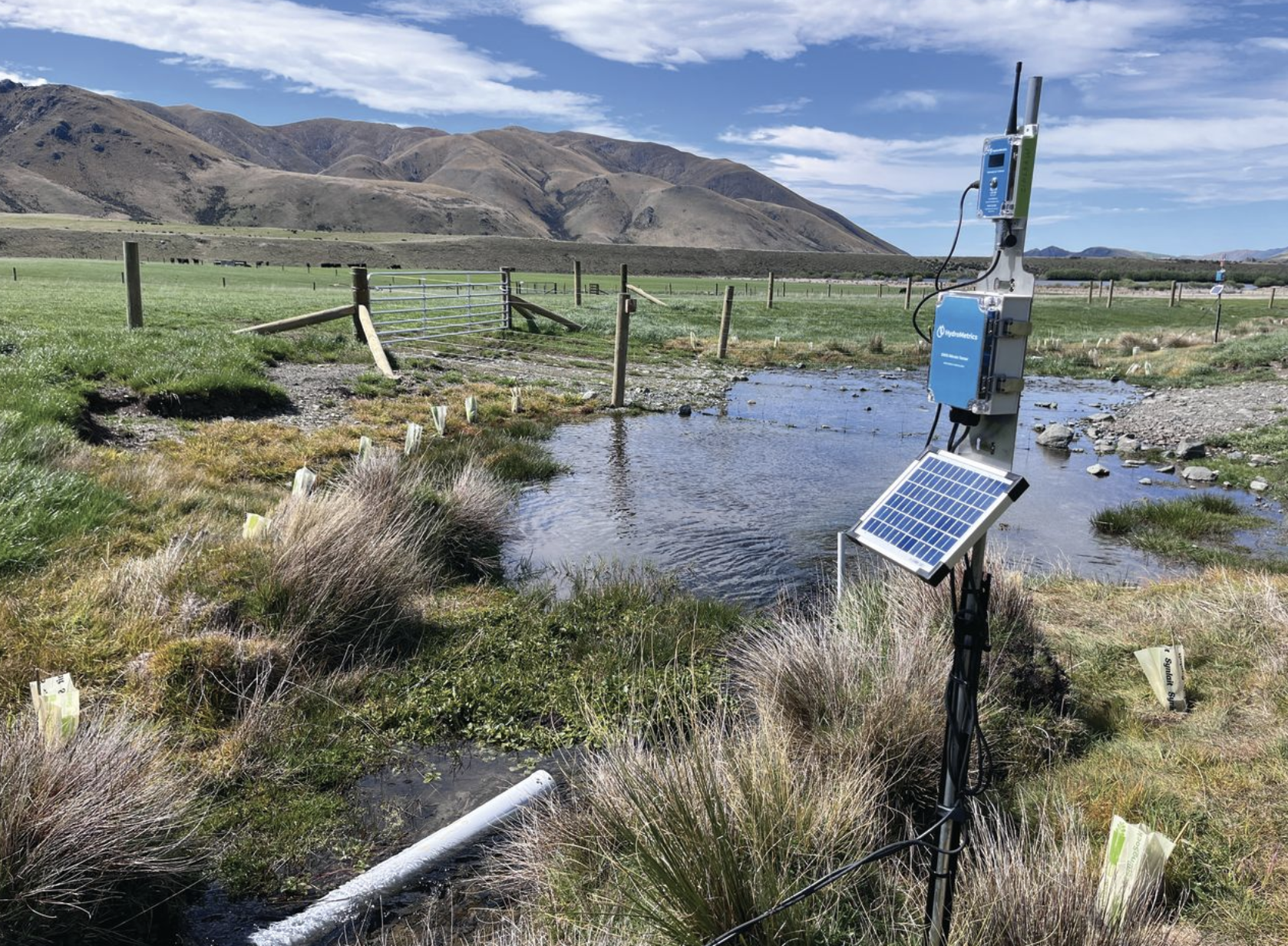
Instead of relying on monthly lab tests, they now use real-time sensors that deliver instant readings from streams, drains, and springs.
The shift is driven by the Mid Canterbury Catchment Collective, a network of 10 volunteer groups and funders committed to improving water quality.
Since 2022, the collective has deployed portable and installed nitrate meters across the region, some providing weekly data and others continuous monitoring.
The technology, developed by Lincoln Agritech and its spin-out company HydroMetrics, uses an optical technique to measure nitrate levels directly in the water.
This approach replaces traditional grab samples with in situ monitoring, giving farmers a dynamic picture of what’s happening beneath the surface.
Lincoln Agritech’s green futures group manager Dave Rankin says the old system offered just one data point a month, far too little to understand trends.
Real-time monitoring means farmers can respond quickly to changes, whether caused by rainfall, irrigation, or seasonal shifts.
The sensors are already helping establish nitrate baselines and track the impact of mitigation measures such as riparian planting and wetland development.
For farmers, the benefits go beyond compliance.
They gain confidence that their efforts to protect waterways are making a measurable difference.
Lincoln Agritech sees this as part of its mission to turn complex land and water challenges into practical tools for rural communities.
By combining science with on-farm action, the initiative shows how innovation can support both environmental stewardship and farm productivity.
As pressure mounts to meet water quality targets, technology like this could become a standard tool across NZ’s farming landscape.