
Successful spray programmes begin with clean tanks.
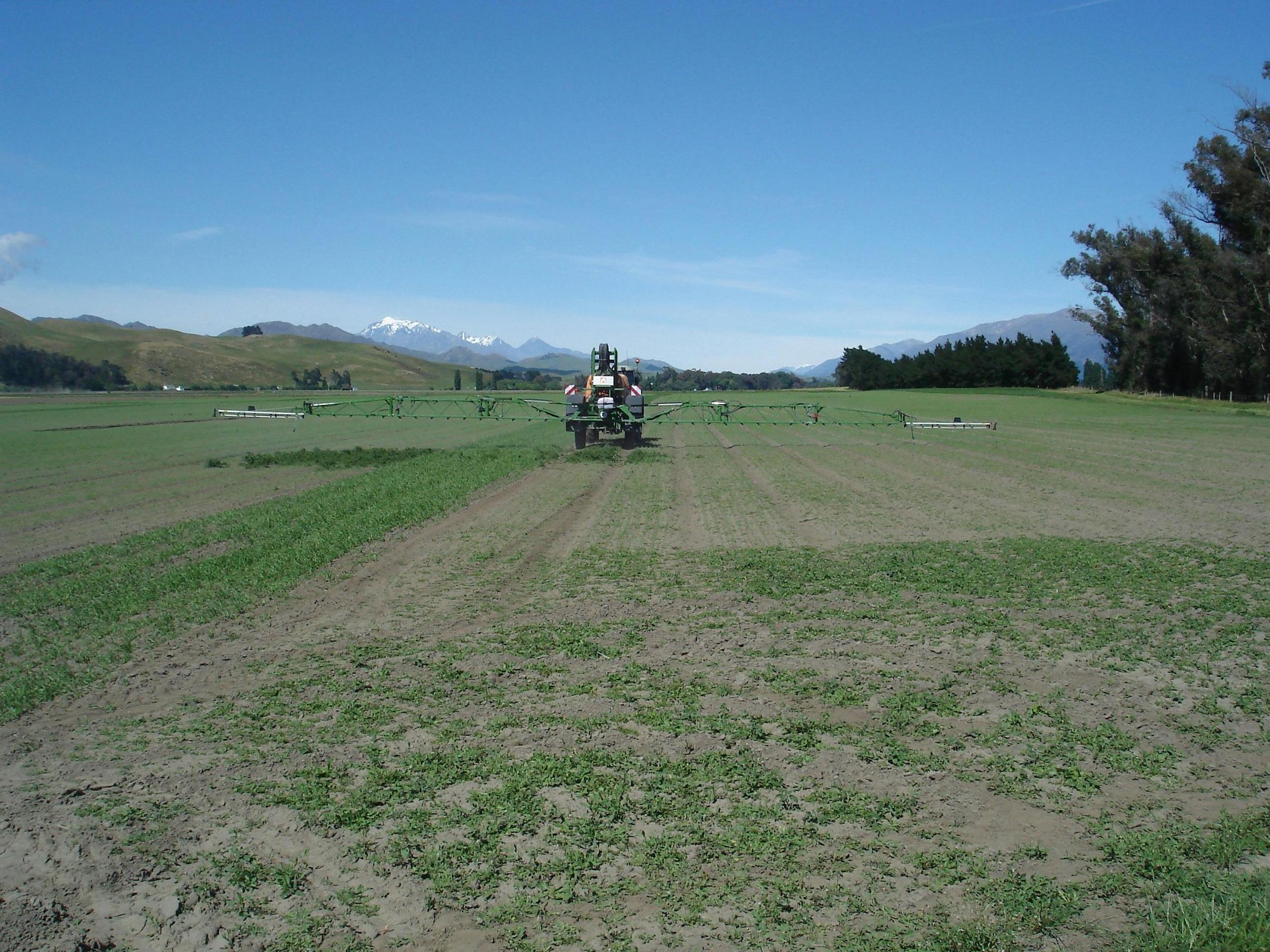
Pieter Van Der Westhuizen, Technical Market Development Manager and adjuvant expert for UPL NZ, says he’s seen pea and maize crops killed by failure to clean tanks.
“Even minute quantities of the wrong chemical left in the spray tank can have a huge impact.”
He says the risk of contamination is particularly high when switching from one herbicide to another, or from a herbicide to a fungicide, fertiliser, or insecticide.
His comments are echoed by Gary Bosley, Technical Specialist Agronomy and Precision Ag at PGG Wrightson.
He agrees many contamination issues can be traced back to inadequate tank cleaning, particularly when tanks are rinsed with water alone or products not specifically designed for sprayer decontamination.
“On far too many occasions I have witnessed unnecessary crop damage from tank contamination caused by poor hygiene.
“In nearly all occasions the sprayer tanks have been washed with either just water or a product not designed to clean sprayer tanks.
“There are some chemicals that have very high activity on some plant species at extremely low levels, for example Group 2 sulfonyl ureas on brassica and beet species.
“This is why we always recommend using a sprayer tank cleaner that is designed and proven for the purpose of cleaning sprayer tanks and neutralising agrichemical products.”
Van Der Westhuizen says laundry powder or ammonia are not going to remove every trace of spray.
“That’s simply not what they’re formulated to do.
“It takes a specialist product to get it right and to protect crops and livelihoods.”
He says All Clear 2X will out-perform ordinary tank cleaners on the widest range of agricultural chemicals, even carfentrazone-ethyl and phenoxy herbicides, which are notoriously “sticky”.
“All Clear 2X has a three-way action, decontaminating, cleaning, and neutralising.
“Its surfactants remove residues and stop re-sticking, while sequestrants lock-up molecules and improve rinse-out, and detergents solubilize and break down residue.”
The recommended way to use All Clear 2X is to drain all equipment immediately after spraying (including tank, hoses and boom).
Rinse the inside of the tank with clean water clear of visible residues and flush through hoses and booms using at least 1/10 of tank spray volume.
Fully drain the tank and dispose of rinsate.
Then half-fill the tank with clean water and All Clear 2X at 250 mL per 100 L of the total volume of the tank and double-agitate the product.
Briefly flush hoses and booms until cleaning solution starts to come out through all the nozzles.
Then, keeping circulating, fill the spray tank to the top.
“It’s best to leave it to sit overnight.”
Van Der Westhuizen says what’s left in the tank is safe to spray out in the yard. All Clear 2X is non-corrosive and is chlorine and ammonia free.