
Fert security (still) starts at home
Cast your mind back to 1982. Rob Muldoon is Prime Minister of New Zealand, and a flagship project in his ambitious, heavilycriticised Think Big infrastructure build-out is just cranking up in Taranaki.
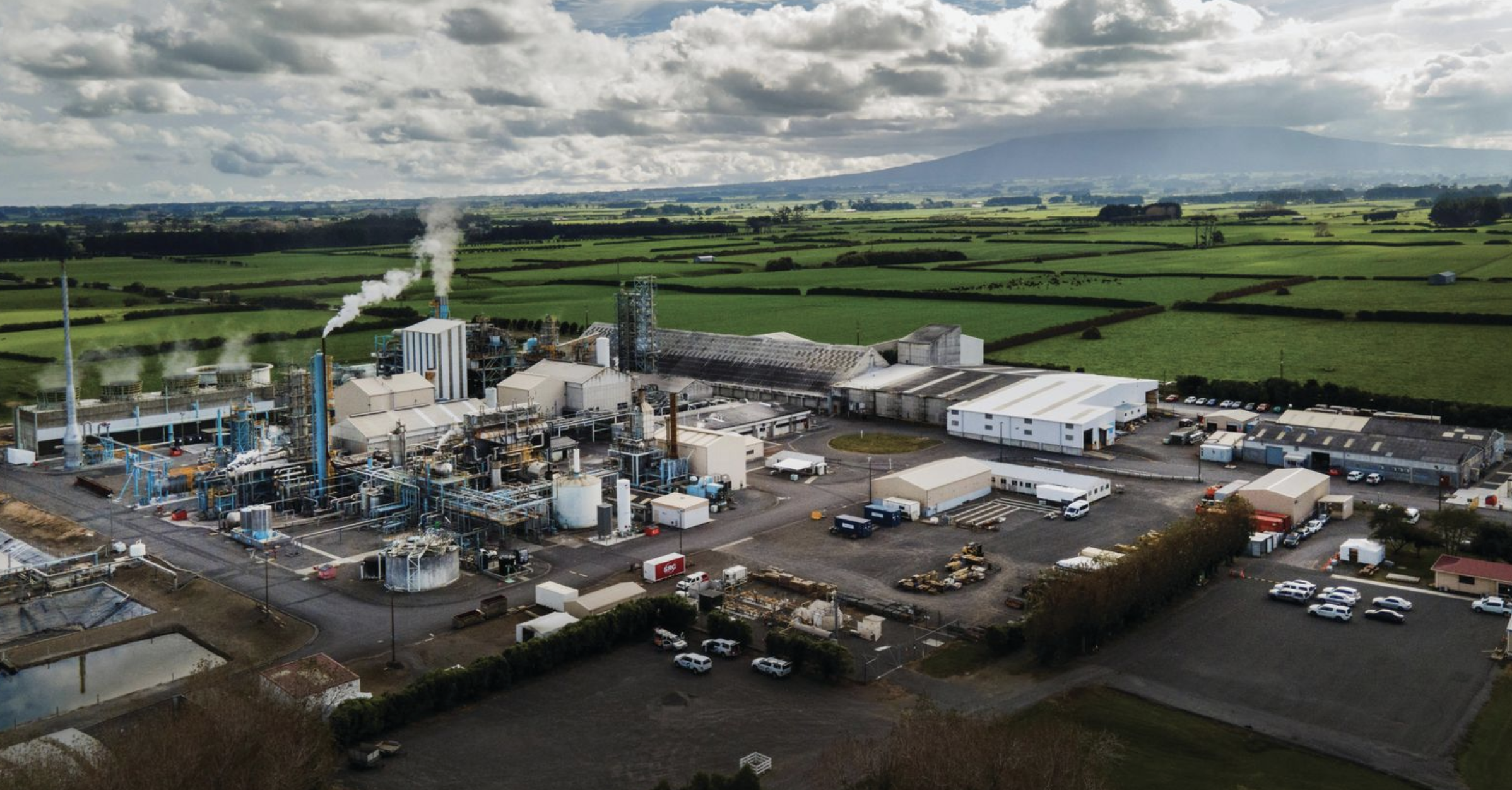
Forty-plus years and more than 8 million tonnes of urea fertiliser later, the fact that NZ primary producers still retain on-shore manufacturing capability for this critical input is one of the few brighter spots in an otherwise murky current outlook.
The path ahead for diesel and fertiliser in general is highly uncertain this season.
But without Think Big, and the ammonia-urea plant at Kapuni supplying about one third of NZ’s total urea, Kiwi farmers and growers would be even more dependent on imported nitrogen fertiliser than they already are.
Ballance Agri-Nutrients has owned and operated the plant since 1992, and CEO Kelvin Wickham says recent commentary suggesting it will close imminently does not reflect the business’ perspective on its longer-term outlook.
“Ballance’s long-term gas contract ended in September last year, however since then we’ve secured additional gas in multiple tranches from a range of suppliers.
The most recent extended operations through to the end of June.”
Wickham says the co-op remains very active in the gas market, and, through ongoing engagement across the sector, is becoming more assured about the likelihood of securing longer-term supply.
“This allows us to approach the future with growing confidence rather than pre-determined assumptions about closure.
With this in mind, we are actively working on a transition plan that would enable continued local nutrient production, retain jobs and capability, and move production towards a renewable future.
Our priority remains very much on maintaining locally manufactured nutrients as part of the nutrient supply mix and preserving future options.
In an increasingly uncertain global environment, secure access to fertiliser matters for farmers and for the wider economy.
The uncertainty caused by the situation in the Middle East highlights how critical local resilience is for NZ.”
Ballance, with Hiringa Energy, Todd, PKW Maori Incorporation and the Ministry of Business, Innovation and Employment, recently announced the planned Kapuni wind energy project has reached an important financial milestone.
Hiringa was due to start building the wind farm from early March 2026, with the first stage focused on civil enabling work at the location of wind turbines.
The project is expected to be generating renewable electricity and green hydrogen in 2027.