
Wearables put to the real-world repro test
A DairyNZ-led study has found no evidence that wearables for oestrus detection improve or worsen key reproductive metrics after adoption in spring calving pasture-based dairy herds.
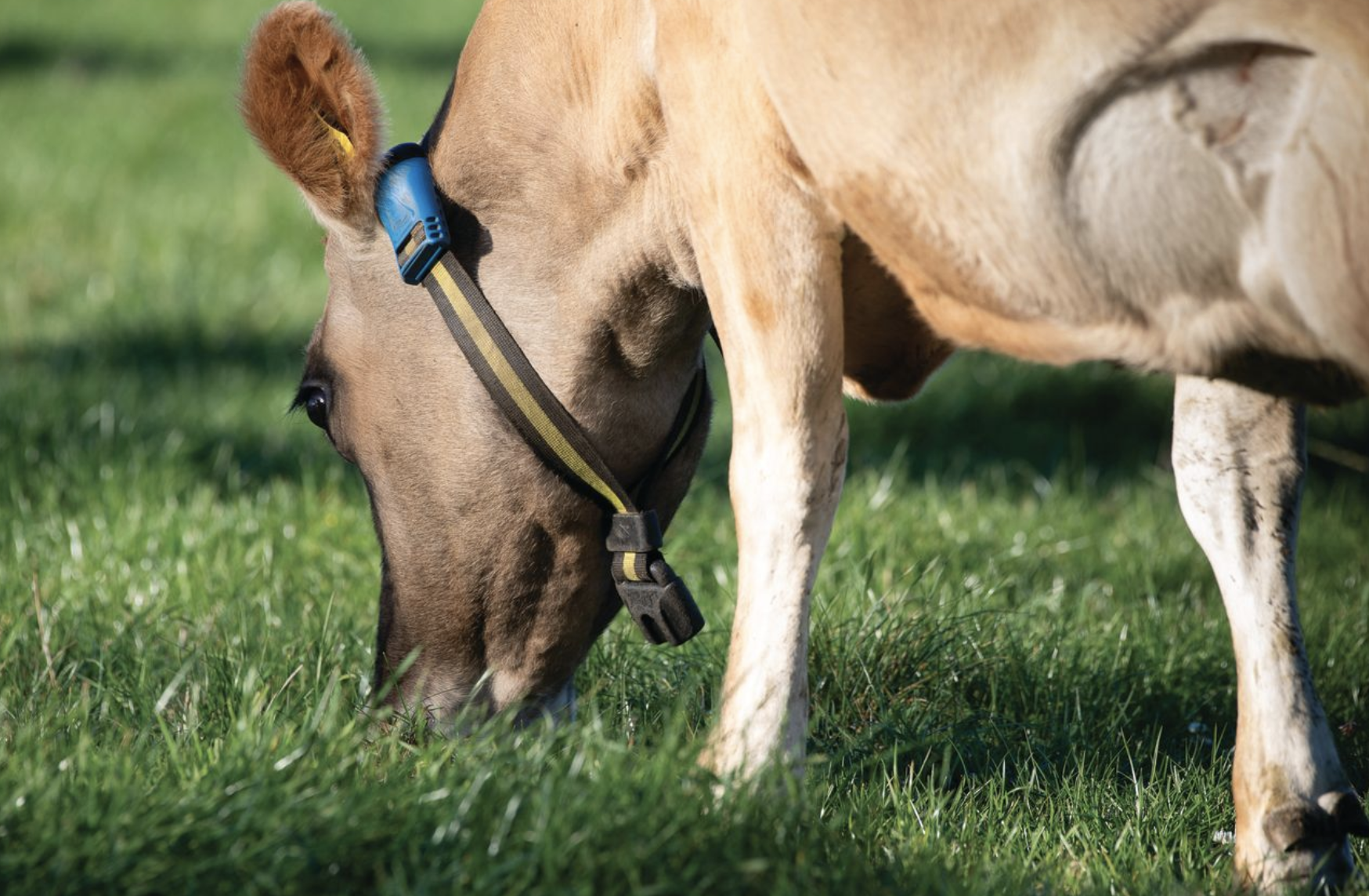
The large-scale research project analysed data from 141 commercial herds that adopted wearables and compared them with 1158 matched reference herds without the technology. Matching considered location, herd size, planned start of calving and milk production. Data covered two years before and two years after adoption.
DairyNZ senior scientist Dr Paul Edwards and colleagues from DairyNZ and EpiVets recently published their findings in the New Zealand Journal of Agricultural Research.
Wearable uptake on NZ dairy farms has increased considerably from 3 per cent in 2018 to 18 per cent in 2023, representing over 820,000 cows.
“These technologies require significant investment by dairy farmers, who, to date, have been making such investment decisions with a lack of independent, publicly available information on expected changes to herd reproductive performance following their adoption.
“With the current adoption level, there should be sufficient real-world reproductive performance data available to better inform this investment decision for farmers considering adopting wearables.
“Accordingly, the aim of this study was to determine the changes to reproductive performance that farmers could expect when adopting wearables.”
The study found wearable herds already showed stronger reproductive performance before adoption. They achieved a 1.1 percentage point higher six-week calving rate and 2.9 percentage point higher three-week submission rate than reference herds. This pre-adoption advantage was maintained after adoption.
"Overall, there was no evidence to support improvement, or deterioration, in reproductive performance following the adoption of wearables," the authors report.
Adoption of wearables did change farmer practices. Wearable herds extended their artificial insemination (AI) period. In the second year after adoption 80 per cent of wearable herds used AI for more than 42 days compared with around 41 to 42 per cent of reference herds.
This longer AI window offers potential benefits. Farmers can use higher genetic merit sires for more calves or select sires with shorter gestation lengths to support better calving patterns.
However the extended AI period affected some metrics. Overall non-return rate declined in wearable herds likely due to recording of longer return intervals that would have been missed with shorter AI followed by natural mating. An adjusted non-return rate focused on the first three weeks showed no significant change.
The estimated six-week in-calf rate also reflected the pre-existing differences rather than any post-adoption gain.
The authors conclude companies marketing wearable technologies ‘should be careful about how they talk about the reproductive performance of farmers with their technology relative to an average so as not to imply that any differences are a result of adoption’.
They also say farmers should not factor improved reproductive performance into return on investment calculations for wearables. Instead they should focus on labour savings, easier heat detection and management benefits. Maintaining performance while reducing reliance on skilled labour for visual oestrus detection is itself a positive outcome.
The study used passively collected calving and AI records from the Dairy Industry Good Animal Database. It covered herds adopting wearables from 2018 onward. Brands included several commercial systems. Reference herds were screened to exclude any with wearable integration.
Higher performing herds were more likely to adopt the technology, suggesting proactive managers see value in automation.
The study did not assess labour savings or other management benefits directly. It focused solely on reproductive outcomes. Further work may explore additional returns such as grazing management or heat stress detection.
Results are specific to spring calving pasture-based systems in NZ. The authors point out oestrus detection is only one factor in reproductive success, and that good reproductive performance depends on multiple drivers.