
Wake up to what we all stand to lose
Kiwis from all walks of life will return to work this summer knowing the true peril posed by wilding pines to our landscapes, productivity and biodiversity, thanks to a bold new publicity campaign launched late last year.
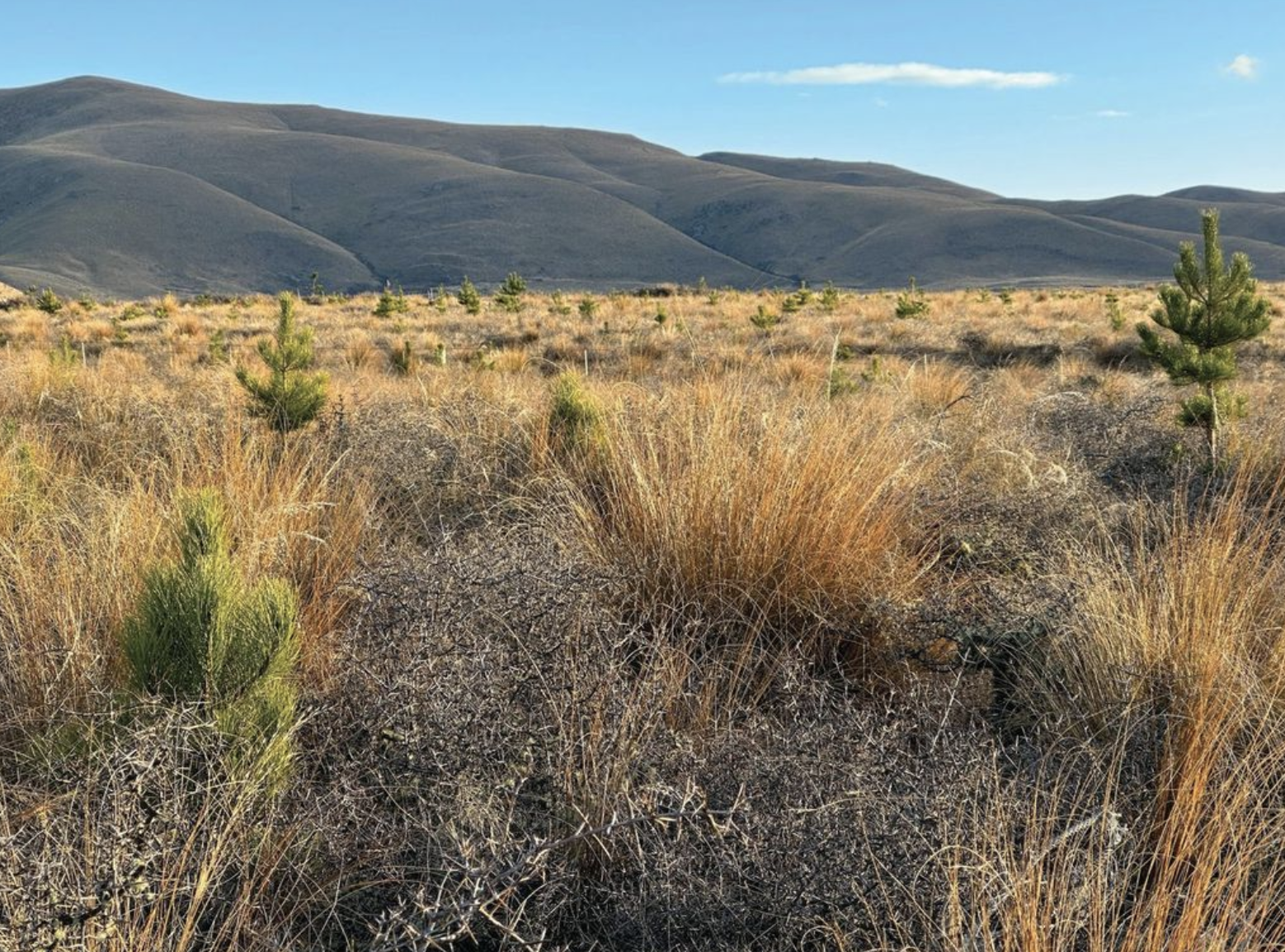
Those behind ‘We cannot lose’ want every New Zealander to understand what’s at risk, not just immediate stakeholders like farmers, regional authorities, and conservationists.
Jo Ritchie, co-ordinator for the Wilding Pine Network, says it’s an urgent call to action, prompted by renewed spread and re-invasion in the wake of reduced funding for control.
“Not only are we not advancing, we’re actually backsliding in terms of the ground gained under increased Crown funding through the Jobs for Nature programme from 2020 to 2023.
“Unfortunately the trees don’t stop spreading and growing when the money runs out...”
Jobs for Nature provided $100 million over four years for wilding control. By contrast, current funding through MPI is $10 million a year.
Other funding comes from the International Visitor Levy, local councils and whatever support is available at community level, but it’s simply not enough, Ritchie says.
She’s keen to hear from anyone who might be able to offer additional support, and says agribusinesses can back the mission in all sorts of ways, like providing low cost herbicides, donating to and volunteering for local control groups, and corporate sponsorship.
As efforts to turn wilding biomass into something useful increase, there’s opportunity at the other end of the spectrum too, she points out.
“This is potentially a home-grown source of biofuel, as we’ve already seen with Pukaki Downs Station in the Mackenzie Basin. They’re turning wildings in wood chips for supply to a local energy company.
“As big energy users like Fonterra convert from coal to other fuels with a lower emissions profile, we want to be on their radar too.”
Even just making yourself aware of the issue helps, if you haven’t already, Ritchie says.
“This is something that touches most if not all of us one way or another.”
Rather than being dependant on who’s in government, Crown funding for wilding pine control should be handled the same as that for controlling bovine tuberculosis.
“It needs to be on-going, and independent of government cycles. Stop:start funding does not work with biosecurity. We need it to be similar to TB control.
“That’s the only way we can make progress, build on the considerable investment to date and provide a secure base for specialised aerial and ground contractors who employ many rural based people.”
Independent cost benefit analysis in 2018 showed a return of $34 for every $1 invested in killing wilding pines, she says.
Featuring both everyday people and well-known faces, the ‘We cannot lose’ campaign is expected to run for at least six months and is part of making both the underfunding of wilding control and the extensive nature of the problem an election issue for 2026.
Most rural communities understand all too well what’s at stake, especially in the South Island, Ritchie says.
“But many people in the general public don’t have that understanding or have no idea of the problem at all. It’s just not something they think about, and we want to change that.”
The impact of uncontrolled wilding spread goes far beyond the land the trees actually infest. Their seed can also blow many kilometres in favourable winds.
“If they’re not tackled with serious, sustained control, we will lose not only our productive land, but our iconic landscapes and unique biodiversity.
“That has very real implications for two of our biggest national income earners – tourism and agriculture – not to mention critical infrastructure like hydro power generation. And it doesn’t even factor in the significant increase in fire hazard.”
Groups associated with the Wilding Pine Network (wildingpinenetwork.org.nz) can be found all over NZ.