
Failing to address a long-term decline in pasture and crop harvest could cost New Zealand’s dairy sector more than $10 billion in lost operating profit by 2064/65, according to new research from DairyNZ.
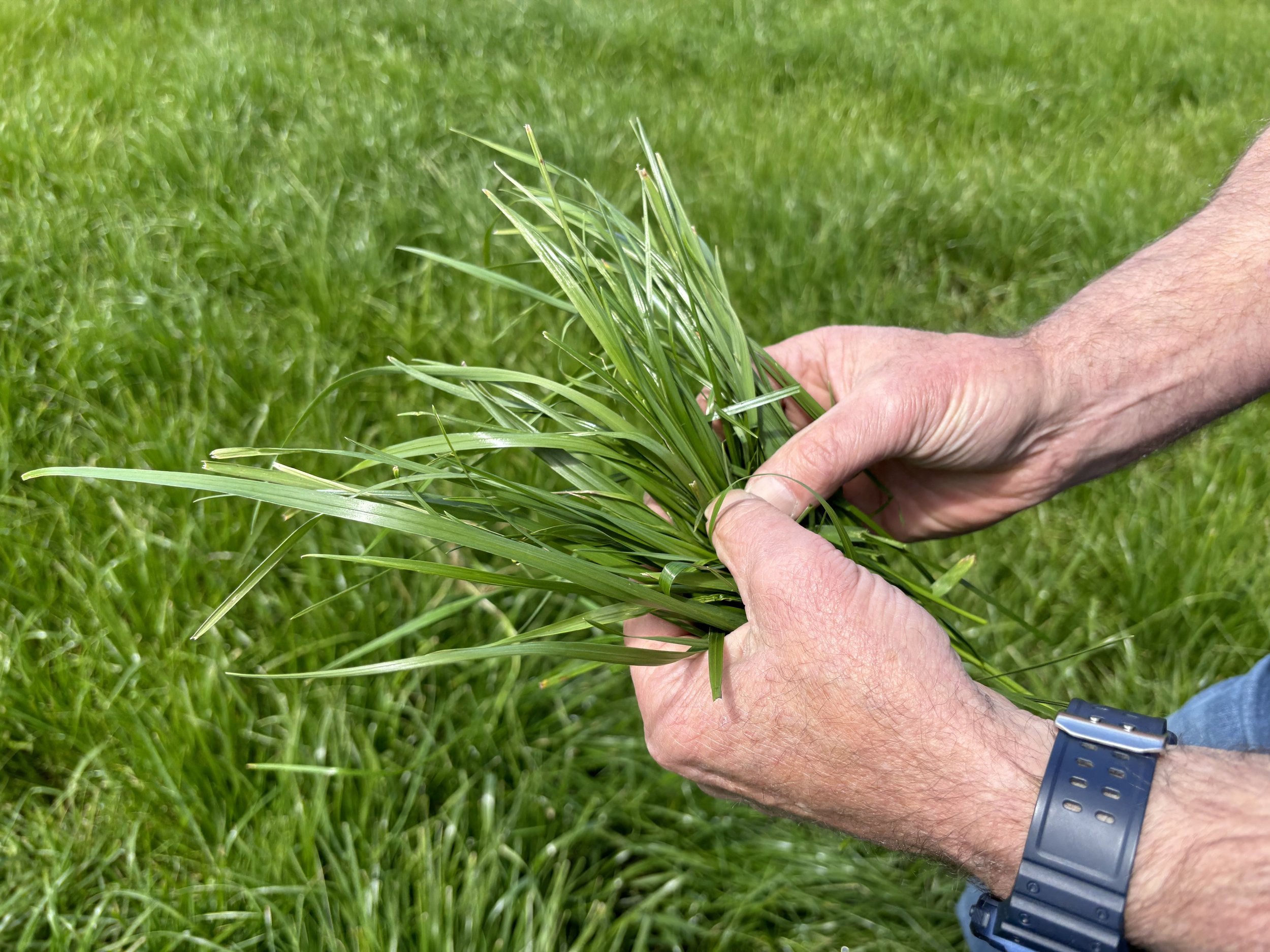
Presented at last month’s New Zealand Grasslands Association conference in Blenheim, the study modelled the economic impact of declining home-grown feed production and the value of potential investments aimed at slowing or reversing that trend.
Using a national dairy sector model, researchers estimated that, if current trends continue and farms increasingly rely on purchased supplements to maintain production, the sector faces a net present value loss of $10.5 billion over the next 40 years.
Senior Economist at DairyNZ and lead author Ryan Mills says the findings highlight the economic importance of maintaining pasture-based production systems.
“Declining pasture harvest imposes a substantial long-term economic cost on the New Zealand dairy sector,” he said.
“The results indicate that declining pasture while maintaining production by increasing reliance on supplement erodes farm operating margins and the sector’s traditional low-cost advantage against international competitors.”
Pasture remains the cheapest source of feed on most New Zealand dairy farms, but the paper notes growing evidence that pasture and crop harvest has stalled or declined in many regions over the past 15 years.
At the same time, milk production per cow has continued to rise, suggesting supplementary feed is increasingly being used to offset reduced home-grown feed supply.
The research examined four scenarios through to the 2064/65 season.
A baseline scenario assumed pasture and crop harvest remained stable.
A business-as-usual scenario modelled ongoing regional declines in pasture harvest, with extra supplement the only tool used to maintain production.
Two additional scenarios assessed the economic value of strategic investment that either slowed the decline or improved pasture and crop harvest over time.
Under the business-as-usual scenario, supplement use would need to increase by 68% nationally to maintain milk production, requiring an additional 2.83 million tonnes of feed.
Without any improvements in technology, practices or pasture utilisation, imported supplements would rise from 17% to 29% of the national feed supply.
The largest regional cost was projected for Waikato, where declining pasture harvest reduced operating profit by an estimated $3 billion in net present value terms.
Canterbury was partially buffered by irrigation, while Northland and the West Coast-Top of the South recorded smaller absolute losses but remained highly exposed relative to their pasture production base.
Mills says this is because these regions already produce lower pasture yields, running at lower stocking rates, giving them less room to absorb these declines without challenging the commercial viability of the farm system.
The study found strategic investment could generate positive returns compared with the business-as-usual pathway.