
Taking local feed to a new level
A Canterbury livestock feed manufacturing mill has been one of the first to get behind a New Zealand-grown grains initiative.
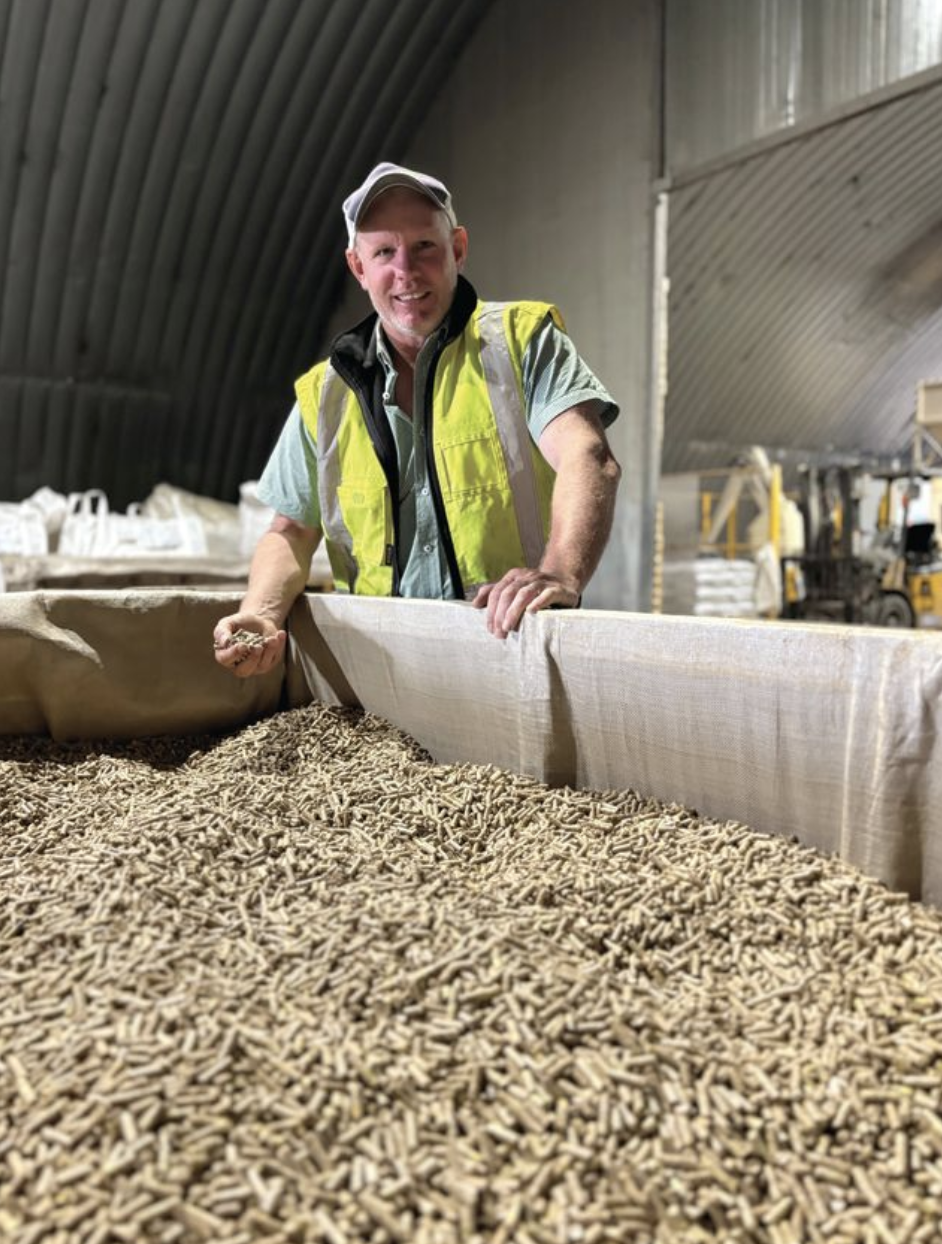
While food-based businesses producing bread, breakfast cereal, plant-based milk and edible oils might be more obvious candidates for the branding, Advanced Feed general manager Neville Prendergast was quick to sign up.
However, it’s not really surprising, with the business based near Methven, in the centre of Canterbury Plains’ arable country.
By launching the NZ Grown Grains logo, arable growers hope to tap into a strengthening desire by consumers for locally-sourced food as well as reduce reliance on imported product.
In the 2025 harvest, arable farmers grew almost 315,000 tonnes of feed wheat and just under 300,000 tonnes of feed barley.
Prendergast says the mill only uses NZ-grown grains, with about 95 per cent of its output destined for the dairy industry.
Feed wheat is the primary rolled grain used because of its high starch, low fibre and strong performance in the mill.
Products using the NZ Grown Grains brand may contain up to 20 per cent of imported ingredients, to allow for components that are not available domestically.
Prendergast says the business was eager to support the initiative because keeping grain production local benefits both arable growers and dairy farmers.
“Domestic grain is not only better nutritionally but keeps more money circulating within the local community instead of overseas markets.
“We want an equal balance of arable and dairy in Canterbury, so there needs to be value in grain. Otherwise we will all be milking cows.”
Fewer arable farmers will mean higher feed and grazing costs for dairy farmers.
Alongside locally-grown wheat and barley, Advanced Feed also sources NZ rapeseed meal and peas as part of its feed formulations.
NZ imports around 2 million tonnes of Palm Kernel Expeller (PKE) annually, primarily for dairy cattle feed, making it the world's largest importer of this palm oil by-product from countries like Indonesia and Malaysia.
More farmer education is needed around the benefits of grain feeding in pastoral dairy systems, says Prendergast.
“Farmers see the cost of the grain bill as being large and look for cheaper options, but they don’t see the missed opportunity for milk production.”
Grain should complement a strong pasture base and not replace grass or act as a quick fix for feed deficits.
Earlier advice to feed ‘a kilo for a kilo’, left some farmers disappointed, as grain’s lower fibre content could not fully replace the structural role of grass in the rumen.
A trial at the Lincoln University Dairy Farm in 2012-13, in conjunction with Dairy Business Centre, showed production benefits from grain-based pellets.
On average, cows produced 0.115 kg of milksolids for every kg of grain-based pellets fed over the full lactation.
In the first 90 days post-calving, the response was even higher at 140 g MS per kg drymatter fed.
Advanced Feed uses a hammer mill which produces a finer product than rolling, improving starch availability for the cow. On-farm rolling can leave grains uncracked, reducing their nutritional value.
The mill has recently invested in upgrades that have increased its production capacity three-fold.
By feeding grain in a pelleted form, minerals and trace elements can be incorporated into the diet on a daily basis.
Prendergast says that farmers often underestimate the role of calcium in a dairy cow, traditionally only dusting it on paddocks until the end of mating.
There is a huge daily pull of calcium on the dairy cow during the milking season and daily supplementation helps the cow meet this demand.
For arable growers, Prendergast says that new wheat cultivars are performing better in the mill and delivering more consistent results. While high protein levels are desirable, consistently achieving 12-13 per cent protein is challenging.
“We would rather that farmers grow good feed varieties rather than getting hung up on protein levels.”
Barley, although slower to mill, remains a valuable feed, particularly during mating and for building condition later in autumn.
Palm kernel can be useful during feed shortages to replace missing grass dry matter, but it does not provide the same energy as grain.
Advanced Feed mills 15,000 tonnes of domestic grain a year and has an ambitious target to get to 60,000 tonnes in the next five years.
“More education and understanding on how grain helps milk yield and profitability will allow dairy farmers to realise the true value of locally-grown grain,” Prendergast says.