
Possum fight takes flight in Otago trial
OSPRI is testing the latest drone and thermal imaging technology to add to its toolbox in the fight against bovine TB.
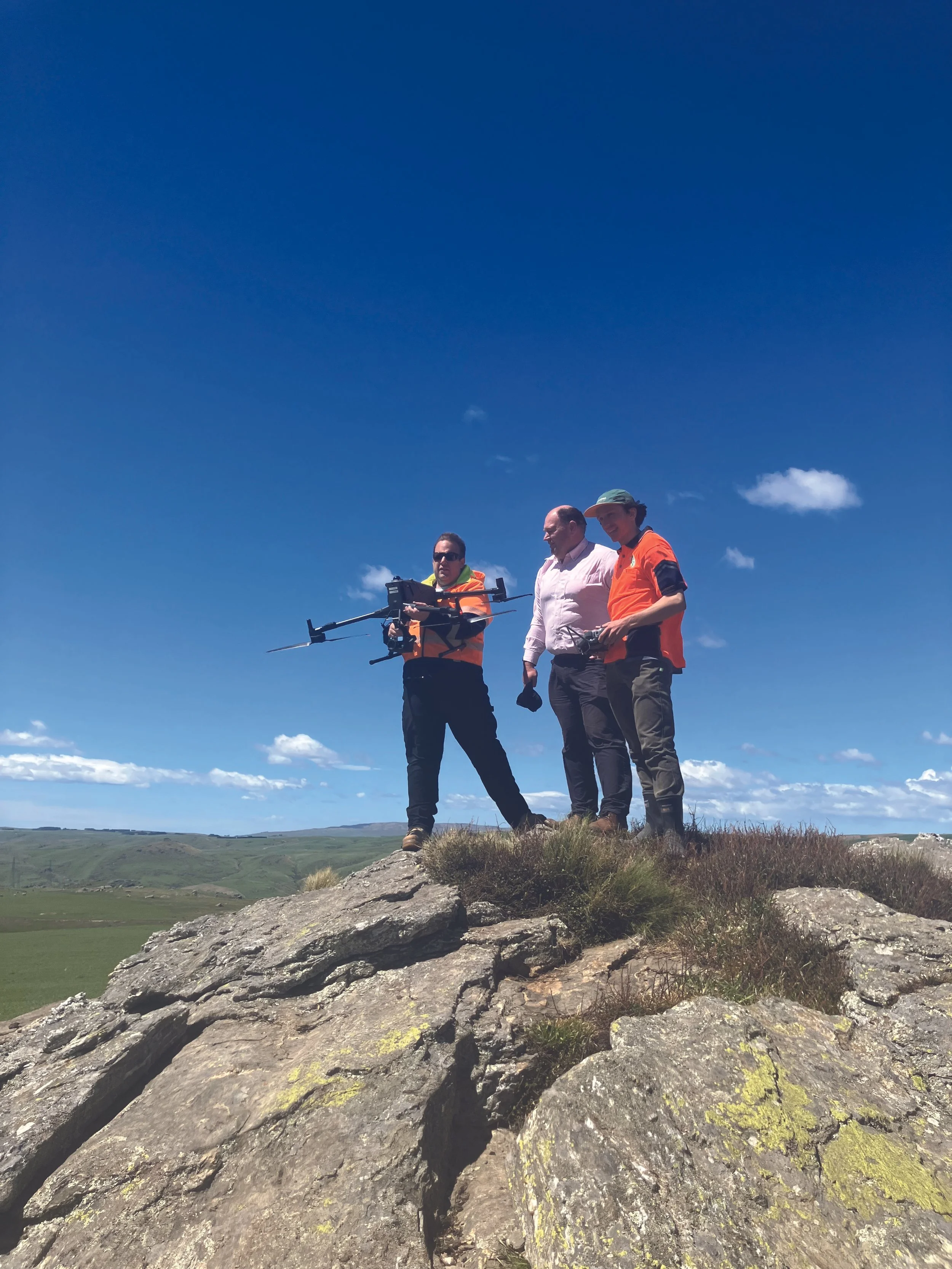
Andrew Hoggard at the trial site.
It’s partnered with contractor Interpine for a series of possum surveillance night flights in the rugged, tussock-covered hills of Otago, where the topography makes traditional possum control challenging.
Drones will cover 400 ha each night out of a total trial area of 2000 ha, monitoring the location and density of local possum populations.
The data will then be analysed and assessed, with the trial likely to be completed early this year.
“We see the use of thermal imaging technology and drones as the next step in our constant search to find new and innovative ways to monitor possum numbers,” says OSPRI chief executive Sam McIvor.
“It’s also about being smart with the way we use the funding we get from farmers, their levy bodies and the government.”
Biosecurity Minister Andrew Hoggard says he has challenged the disease control agency to seek out new and innovative ways to step up the fight against bovine TB.
“Many farmers today may not remember the terrible situation that existed back in the late 70s through to the early 90s, where thousands of herds had TB infections.
“I remember as a child the anguish and cost this caused my parents whenever an infected cow was found in our herd.
“We only need to look to the United Kingdom and Ireland nowadays to see how much this matters, particularly the mental strain this disease can cause on farmers. That’s why it’s so important that we finish the job.”
Sam McIvor says Otago is a logical spot to test the technology because it is a TB hot spot, and OSPRI has 1.3 million ha to cover in the region.
In rugged terrain, traditional methods of possum control such as trapping, shooting and helicopter operations are not only difficult but extraordinarily expensive.
Drones can access remote areas, detect possum populations and pinpoint exactly where ground teams need to be deployed for control.
“This technology means we find more possums, faster, and can get the disease eradicated faster.”