
New role underscores commitment to biologicals
Corteva Agriscience has taken a major step to advance its move into biologicals, appointing Canterbury’s Jess Ross to a brand new role that signals confidence and momentum ahead of its first launch in this new category.
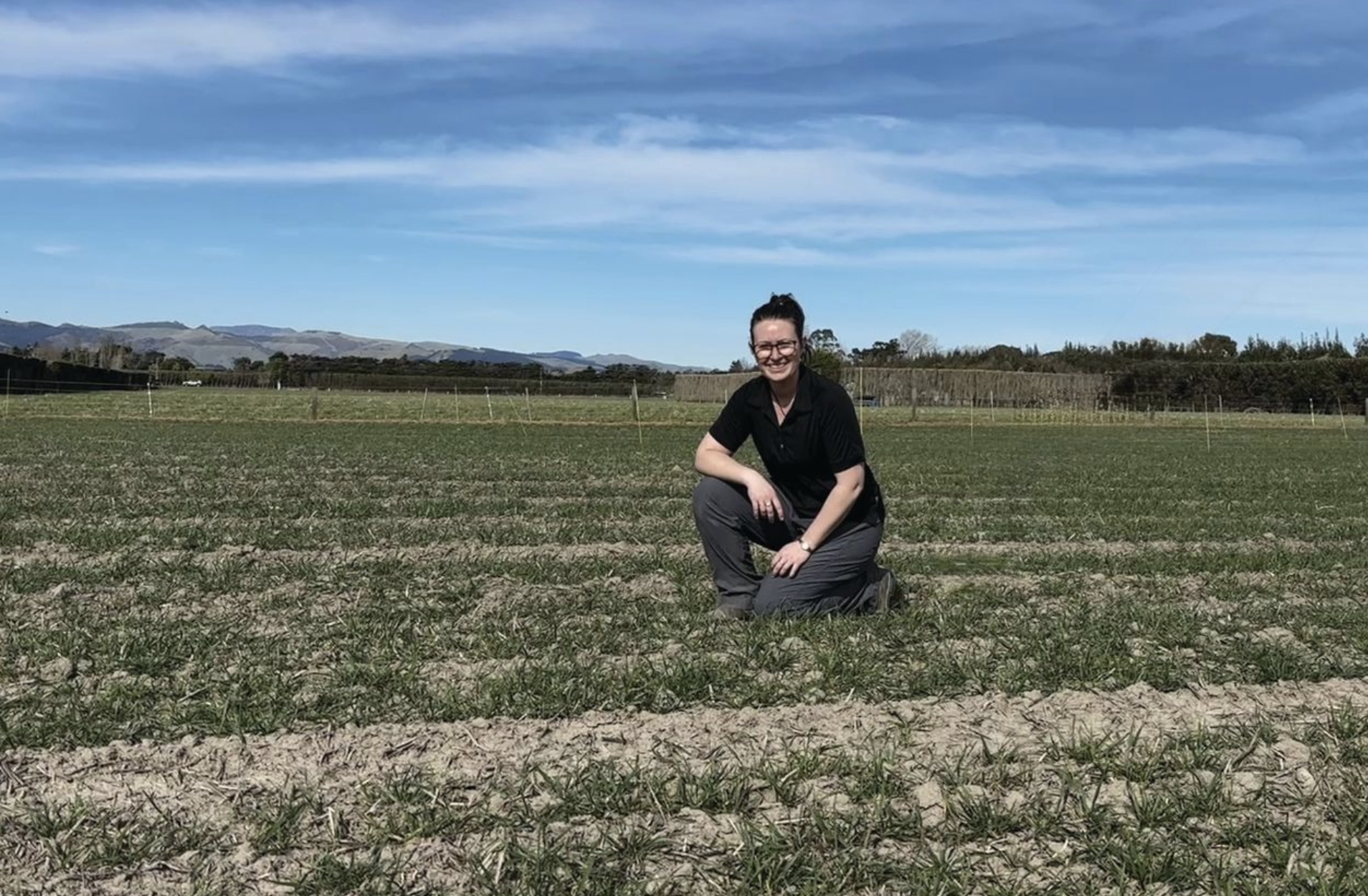
“We’re really excited about Jess joining us,” says general manager Glen Surgenor.
“She’s a perfect fit for the position, and this is great news for both our channel partners, and the market as a whole.”
Surgenor says the company’s planned first biological product launch this year required early and deliberate investment in technical capability, and Ross’s appointment shows a clear commitment to supporting internal teams and the trade as the bio portfolio ramps up.
While the crop protection industry has weathered some doom and gloom recently in New Zealand, expanding the team and creating a new role ahead of saleable product demonstrates Corteva’s support and trust in the local market and belief in strong potential for biologicals in local farming systems, he says.
Ross became Corteva’s biological technical specialist and territory manager for the upper South Island, covering Tasman and Marlborough, in January.
She says joining Corteva is something of a homecoming, as she’s spent more than five years working closely with the company through Field-Tek, a Canterbury-based research contractor known for its work in crop protection.
That long-standing partnership gave her insight not just into Corteva’s culture but also its research pipeline, which she describes as collaborative, forward-looking, and grounded in genuine care for the industry.
“I had done quite a lot of work with members of the team like Nicole Morris (now marketing manager) and Matt Denton-Giles (country field scientist), so I was drawn to the people as much as the science.”
Her professional path has taken several turns, beginning in ecology and marine science before an unexpected pull toward food-production systems during university summer jobs.
Ross grew up in Canada on a buffalo farm in an oil-and-gas region, and although she once imagined she would steer clear of farming, the primary sector found its way back into her life.
Before joining Field-Tek, she worked in horticultural supplies with Fruitfed Supplies in Timaru and earlier spent time at Brownrigg Agriculture.
COVID altered her plans for overseas travel, but the disruption opened a pivotal door when Field-Tek took her on part-time and allowed her to complete her postgraduate Masters study at Lincoln University.
The role exposed her to a wide range of multinational development work and helped build familiarity with emerging technologies, trial design, and product development across a broad spectrum of crops.
“I could see that biologicals were the next step in farming, especially as resistance challenges increase pressure on conventional chemistry.”
She sees biologicals not as a silver bullet but as tools that must be integrated thoughtfully and gradually into existing programmes to build trust and ensure realistic expectations are set.
Some growers, she notes, have tried biologicals without the right background knowledge, leading to disappointment and hesitancy, and part of her mission is to rebuild confidence through clear, consistent guidance.
Last year she completed the Kellogg Rural Leadership Programme, focusing her project on the integration of biologicals into the NZ market.
“That gave me a really good insight of both their potential in NZ systems, and the growing pains the sector must work through before these tools achieve mainstream adoption.”
Creating uniform expectations across the industry will be essential, she says, along with adjusting programmes to accept that a small increase in disease or insect pressure may sometimes be part of a sustainable long-term strategy.
Glen Surgenor says Corteva had been working toward this role for 18 months, waiting until the company had clarity on what biological products were coming and when, and ensuring the business case stacked up.
Jess Ross can be reached at 027 354 4169