
New forage options proving their worth
Three of the most recently released forage brassica options on the New Zealand market offer farmers a great opportunity to step up their seasonal feed production next season.
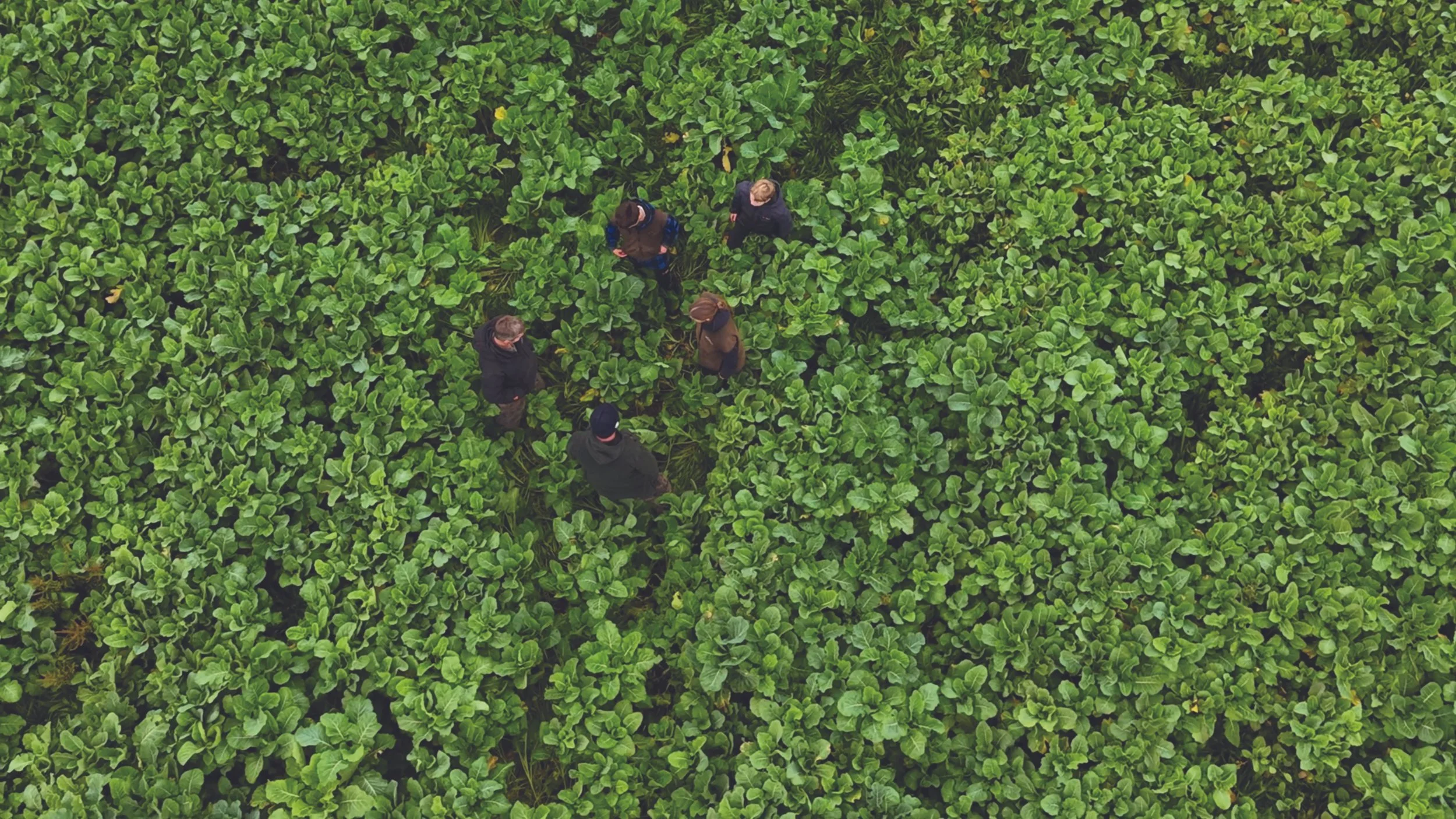
That’s according to Cropmark Seeds, which says all three have been bred and tested in New Zealand to help your clients bridge critical grass gaps in sheep, beef and dairy systems.
After a limited release last season, it’s launched a full promotion for Kea kale, Saddleback swede and Rifleman rape ahead of spring sowing.
New Zealand Sales Manager Callum Davidson says feedback from farmers who tried the new cultivars in 2025 has been very positive, and Cropmark is excited to bring resellers and end users a wider range of options in the forage brassica market.
One farmer who got in early last year is Hendrik De Vries, co-owner of Aparima Dairies in Southland.
His first crop of Saddleback swede averaged 14-15 tonnes dry matter per ha, and would have peaked at 18-19 tonnes, he says.
“Considering how saturated the season was, we were pretty happy with that. Some of the bulbs got so big the cows were struggling to eat them; we weighed a few that were 14-15 kg each, but they cleaned them up.”
Saddleback is a yellow-fleshed swede bred specifically to tolerate disease pressure without compromising on yield.
It has repeatedly delivered on this goal particularly against common diseases in the cooler, southern parts of the country, Davidson says.
Kea kale, with its palatable stems and high feed quality, kept dairy heifers full and content in Canterbury last winter for Dromore farmer John Duncan.
Yielding 18 tonnes dry matter/ha, his dryland crop won the kale section of the local winter feed competition too.
“It’s very utilisable,” he says. “Heifers ate it right to the ground, with hardly any residue left, and they cleaned it up because it’s good quality feed, not because they were hungry!”
Hawke’s Bay farmer Mark Whittle has been equally impressed with Kea, particularly its palatability, regrowth and the performance of stock grazing it.
“I really like the Kea kale because it’s got a big leaf, a nice clean leaf, and it’s very palatable. The animals love it,” he says.
His hoggets go onto the crop at around 42 kg liveweight, with Whittle expecting them to reach around 55 kg by the time they come off in September.
“And that’s through the very cold winter. They really do well,” he says.
At Springvale Station in Hawke’s Bay, Kea is also performing well in a sheep and beef trading system.
“A lot of the time we’re just trying to hold lambs on it, and before we know it we’re killing off it, even when we’re trying to just hold them,” Tim Mouat says.
Kea is an intermediate kale bred for high dry matter yield and leaf percentage, with feed quality, utilisation and animal performance among its key strengths.
Recording significantly more dry matter than other similar cultivars, Kea’s total yield averages over 40% leaf when winter grazed from a spring sowing.
It’s also highly flexible, with grazing possible from as early as 50 days after spring sowing for a multi-graze crop, through to 220 days with no loss of quality.
Rifleman, meantime, is a very leafy dual purpose rape with strong regrowth for multiple grazings over summer and autumn from a spring sowing, or a single graze during winter from an autumn sowing.
An intermediate mid-maturity cultivar, it’s ready for grazing 70 to 90 days post sowing, depending on conditions, and offers excellent feed quality with a high leaf to stem ratio.
Superb regrowth means it can be sown with companion species like plantain, clover, chicory, clover and short-term grasses, Callum Davidson adds.
All three new cultivars are available for spring sowing now.