
New Zealand dairy herds are already feeling the pressure of hotter summers, and DairyNZ researchers are driving a multi-year programme to understand and manage heat stress before it becomes a major constraint on pasture-based farming systems.
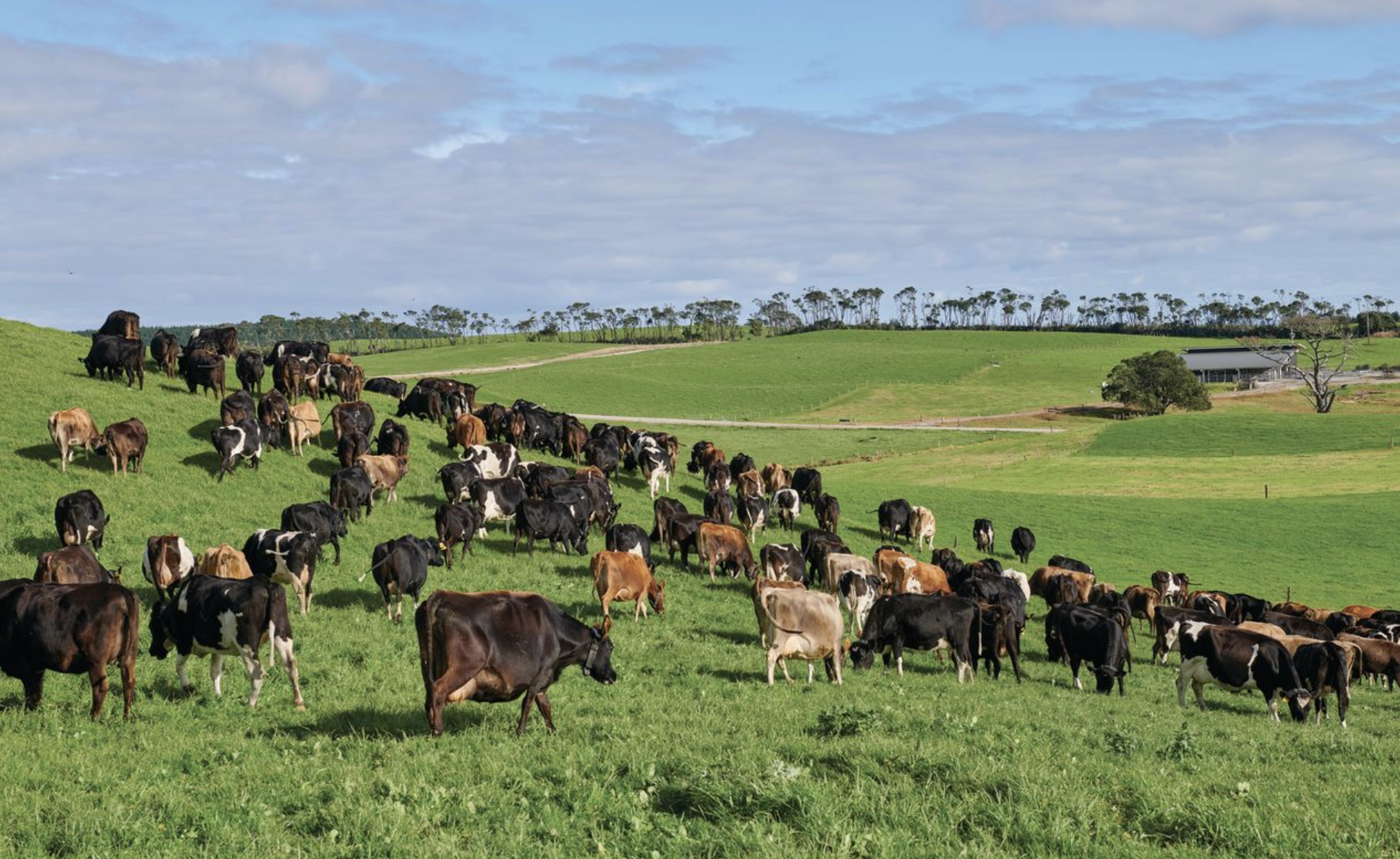
Photo: DairyNZ
Regions across the country are experiencing more frequent high-temperature days. The 2020s shows averages ranging from 37 days in Otago and Southland to 69 days in Waikato and Bay of Plenty and 80 days in Canterbury, placing outdoor-grazing cows at increased risk of heat load.
Cows begin to experience heat stress at temperatures above 20°C, a threshold well below what most humans would consider uncomfortable, meaning rising summer temperatures directly affect cow comfort, behaviour and productivity.
DairyNZ researchers have already completed several key milestones, beginning with mapping the regions most at risk and confirming that heat stress is now a routine on-farm challenge rather than an emerging one.
A major early achievement has been the development of the Grazing Heat Load Index, a model tailored specifically to NZ grazing systems that incorporates solar radiation, temperature and wind to more accurately predict when cows struggle to shed heat. This model replaces traditional indoor-focused indices such as THI and represents one of the first tools built with NZ outdoor farming in mind.
Researchers have also completed extensive farmer engagement work, including surveys and workshops, capturing farmers’ views on how heat stress presents in their herds and what support they need to adapt effectively. These discussions revealed that farmers want clarity on whether cumulative heat over the day or short, intense bursts cause the greatest impact on milk production, and they want practical management options confirmed through real-world evidence.
Another milestone achieved is the expansion of digital capabilities, with wearable sensors, rumen temperature boluses and milk-vat monitoring providing near real-time data that far surpasses what manual observation could offer even a decade ago, researchers say. This rapidly growing dataset allows them to pinpoint the onset and severity of heat stress more precisely and test how cows respond to different interventions under varied climatic conditions.
Despite this progress, several important research questions remain, and these form the next stage of DairyNZ’s work.
Researchers are preparing a new study that pairs sensor-derived cow data with milk-yield records and on-farm weather information to quantify exactly how heat stress affects milk production and composition. This work aims to close the long-standing knowledge gap around how much milk loss results directly from heat rather than from other confounding factors such as feed variation or herd management changes.
The design of new farmlet trials is also underway, with farmers helping shape scenarios that reflect common NZ system changes, such as altering milking frequency, shifting afternoon milking times, or combining several mitigation methods for cumulative effect. Survey data shows that 65 per cent of Waikato and Bay of Plenty farmers and 40 per cent of Canterbury farmers already use sprinklers or misting systems in the yard, and researchers plan to test how these and other options perform in controlled trial environments.
Further work will investigate individual cow variation, recognising that not all animals respond to heat in the same way and that better identification of susceptible cows may allow for more targeted interventions.
Another future milestone will be defining the most reliable wearable indicators of heat stress for NZ grazing conditions, a crucial step in developing automated early-warning systems that farmers can rely on.
As expectations around ethical and sustainable food production grow, DairyNZ’s research aims to give farmers the tools and evidence they need to protect cow wellbeing, improve resilience during hot periods and maintain productivity within a changing climate.
This work forms a central pillar of DairyNZ’s Enhanced Animal Care Programme and continues to evolve as more data becomes available and farmer insights shape the direction of the research effort.