
Great regulation needed to drive future growth
Catherine Beard believes New Zealand has a choice to make.
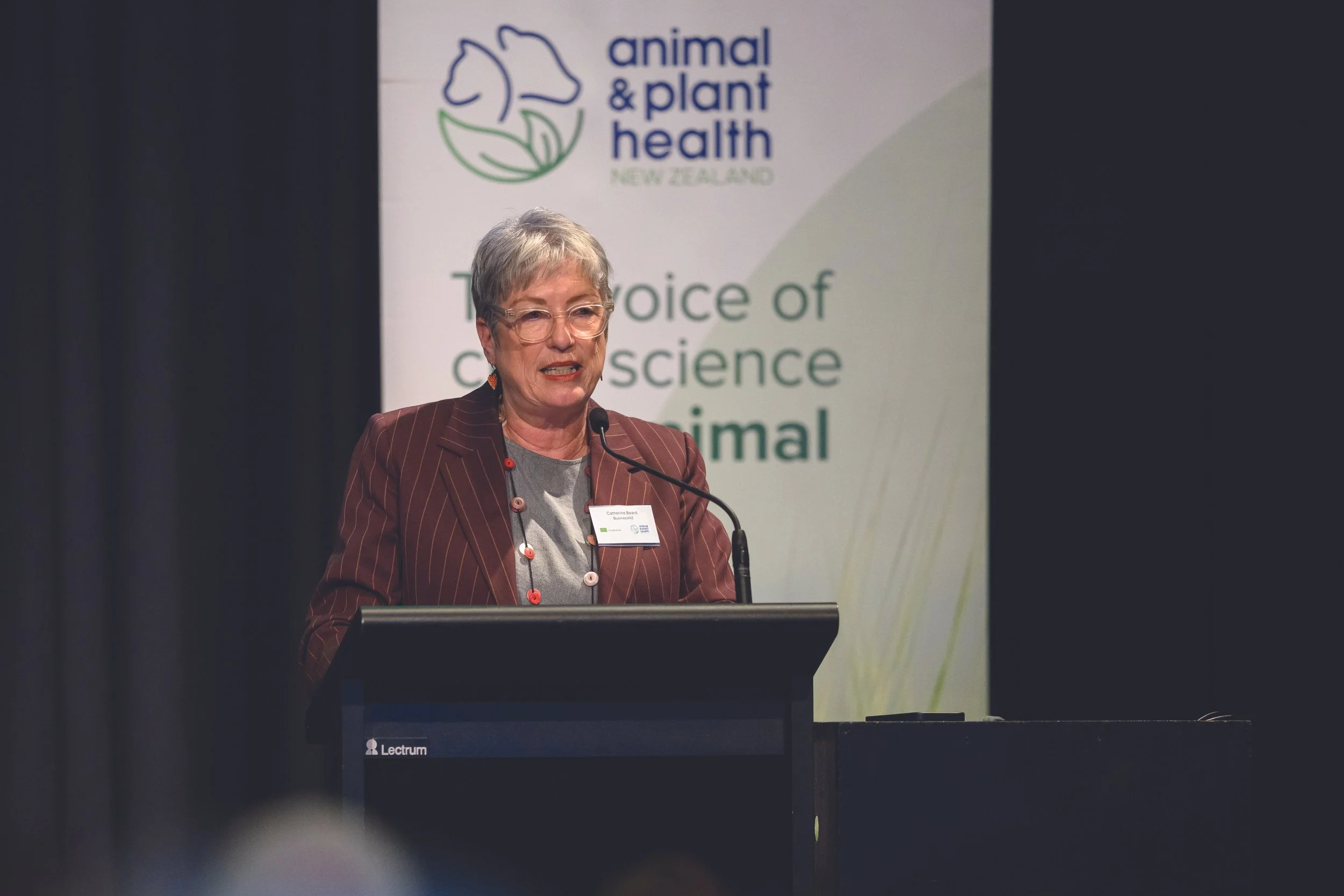
It can continue to accept regulatory systems that slow investment and innovation, or it can become one of the easiest places in the world to do business.
Speaking at the annual Animal and Plant Health Association of New Zealand (APHANZ) conference, the BusinessNZ Director of Advocacy argued that great regulation, rather than merely good regulation, will be critical to the country's future prosperity.
Drawing heavily on the challenges facing the animal and plant health sector, Beard says New Zealand's regulatory settings have become a significant barrier to investment, product innovation and economic growth.
"We have a population the size of an Australian city," Beard says. "We need to make ourselves the easiest place to do business, not the hardest."
For multinational companies weighing up where to invest, New Zealand's small market size means the country must compete on the quality and predictability of its regulatory environment.
Beard says foreign investment brings competition, employment, innovation and consumer choice, but companies will only invest if regulatory systems are easy to navigate and outcomes can be predicted with confidence.
Central to her argument is strong support for the Ministry for Regulation, which BusinessNZ has championed for many years.
"New Zealand, in the view of BusinessNZ, has long been missing some discipline around how we make regulations," she says.
While regulatory impact statements are intended to test the need for new rules and weigh up costs and benefits, Beard says the quality of those assessments varies widely.
She stresses that every regulation imposes costs on businesses, and policymakers must be clear about the problem they are trying to solve before adding further requirements.
Beard also urges industry organisations to defend the Ministry for Regulation against political pressure.
"This is bigger than party politics, frankly. It's about having a good regulatory environment in New Zealand. So every opportunity you get, please support it."
The animal and plant health sector provides a powerful case study.
Referring to the Ministry for Regulation's review of the current approval system, Beard says it has exposed broader issues across government agencies, including risk aversion and a reluctance to rely on overseas regulatory decisions.
One submission to the review warned that low confidence in the system had directly affected a global company's willingness to continue investing in New Zealand agriculture.
Importantly, she does not see the problem as unique to agricultural products.
Similar delays exist in the pharmaceutical sector, where businesses report lengthy waiting periods before innovative medicines can even be assessed.
"I think it's a bit of a New Zealand problem," Beard says. "Same problem, different kind of chemicals, but same problem."
Another concern repeatedly raised by BusinessNZ members is the growing cost of regulatory fees and levies.
Through its food, fibre and beverage group, which includes APHANZ and other primary sector organisations, BusinessNZ identified MPI's cost recovery framework as a common concern across industries.
In response, BusinessNZ commissioned economic analysis, consulted member organisations and presented recommendations directly to ministers.
Beard says businesses want greater transparency around how cost recovered funds are spent, stronger input into work programme priorities, and clearer reporting linking budgets, actual expenditure and delivered outcomes.
The issue extends well beyond agriculture.
"It's wider than your sector; it's across every sector."
She warns fiscal pressures on government departments are creating a growing incentive to recover costs from industry while businesses face the cumulative burden of multiple charges imposed by different agencies.
Looking ahead, Beard argues New Zealand needs a much longer-term approach to economic development.
BusinessNZ has developed a 2050 vision aimed at moving politics beyond short electoral cycles and constant policy reversals.
"What does good look like in 2050?" Beard asks. "Where do we want to be? Can we have a collective vision for that? And can we stay the course?"
She sees significant opportunities for New Zealand to position itself as a global destination for trials and innovation, including agrichemical trials, animal treatment trials, pharmaceuticals, medical devices and emerging technologies.
Achieving that ambition, however, depends on creating a regulatory environment that is welcoming, proportionate and internationally connected.
"The future is what we make it," Beard says.