
Equine fencing – where behaviour leads the way
Fencing for horses is not just about strength, durability or aesthetics; it’s about understanding the animal behind the fence.
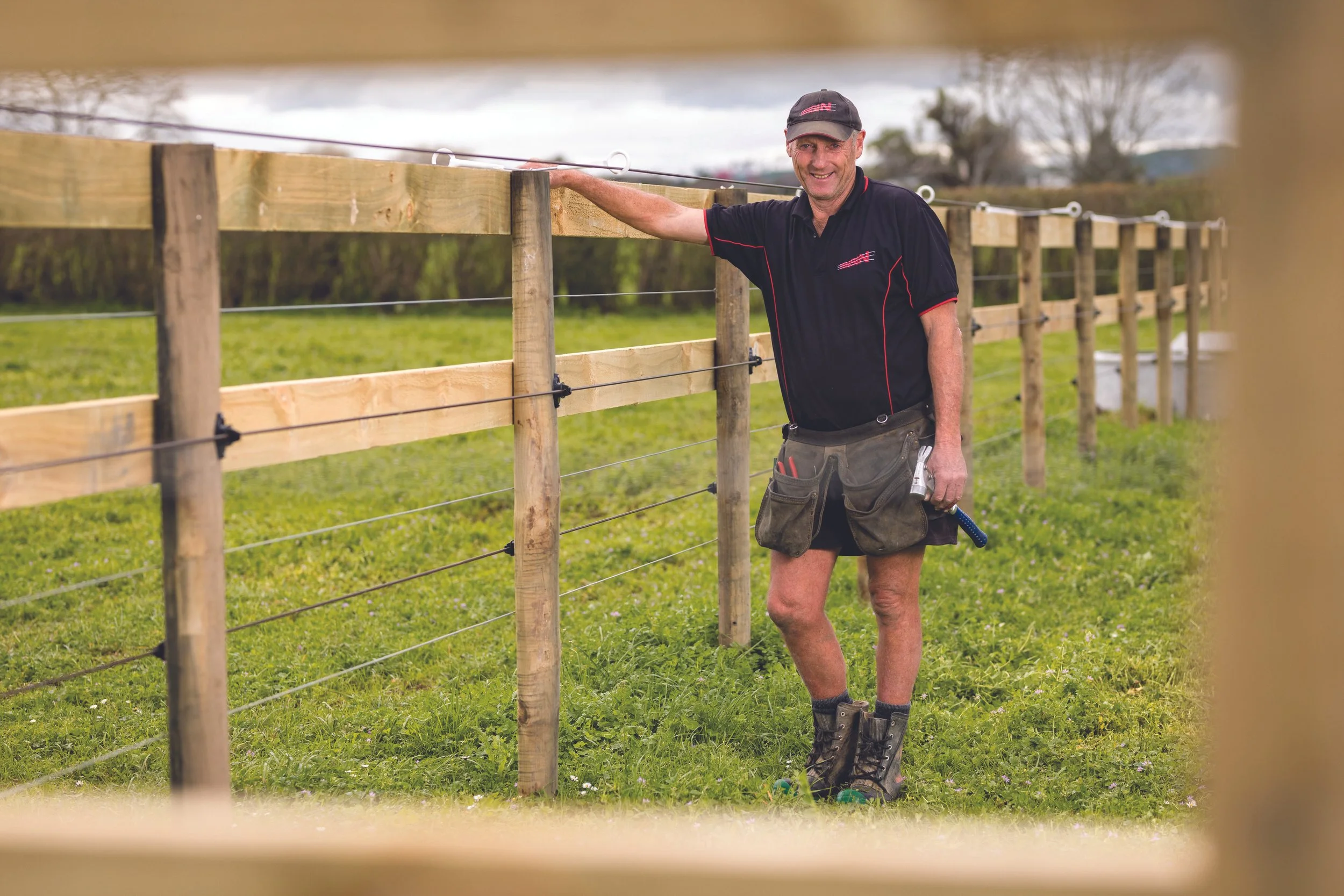
Neil Robertson.
Horses are fast and strong, so fencing must match each animal's temperament.
Effective equine fencing accounts for how horses see, move, and behave, relying on more than just materials to ensure safety.
Neil Robertson from Waikato-based fencing contractors, Fensin, explains that horses react quite differently to cattle or sheep.
“Horses are flighty animals, especially racing horses or bloodstock animals. If they get a fright, it doesn't matter what's in the way, they'll run into it,” he says.
For this reason, a coated equine fence wire is often put alongside wooden posts and rails so horses can clearly see the fencing.
Best practice means prioritising visibility, eliminating sharp edges, and using electrification as a sensory barrier that the animals soon learn to recognise.
Horses also have a tendency to rub, lean, and test boundaries and, as Robertson points out, often chew on the timber.
“That’s where the electricity comes into it. They learn to respect the fence and keep clear.”
Contractors like him use the High Conductive Equine Fence Wire from Gallagher in high and low positions.
“With a wire up higher, they learn not to lean over to top,” he says.
“And there’s usually a lower wire, so when they lean down to the ground their nose might get a bit close to the hot wire and they know to move away.”
Well-positioned wires are also beneficial for foals, who quickly learn to respect the pulse of the voltage currents.
“One of the biggest mistakes I see is people not considering the horse’s behaviour,” Robertson says.
“Poor visibility, or fences too low or with sharp corners, all increase risks. Not using the right products for the type of animals you’re fencing can be dangerous – you shouldn’t always go with the cheapest.”
He integrates equine-specific products like flexible equine wire, permanent wire strainers, and electric offsets.
“Timber can be expensive, so you want to make sure you’re building something that will last.”
Using these products often means he can have wider spaces between the uprights, which can help reduce some costs.
Gallagher’s equine fencing systems are designed with horse behaviour in mind.
For example, the High Conductive Equine Fence Wire and its plastic insulated coating are thick, with benefits beyond having greater visibility.
“These equine wires have good give in them if a horse butts into them,” Robertson says, “and, because they’re not so thin, they’re not so sharp. No-one wants pricey vet bills from wire cuts.”
If an animal crashes into a fence, the wire’s thickness means it won’t spring back and curl up so easily.
“There’s less risk of them getting tangled up in it.
“You have to understand the natural temperament of your horses and how, from foal to adult, they’re likely to behave, because it definitely varies across the breeds.
“It’s all in the planning,” he advises, reiterating the importance of well-considered design, from understanding soils so posts are well-anchored, to planning for ongoing maintenance.
It’s also important to understand how humans will use the space too, thinking about power distribution and how people move between areas.
Using a registered FCANZ installer is Robertson’s absolute must recommendation.
“The training and accreditation means you get smart advice from an expert – people who know how to get the best out of the products and keep you and your horses safe and happy.”