
Clean paddocks prove commitment wins
Seeing Californian thistle control working in real paddocks is giving farmers renewed confidence that one of the country’s most persistent pasture weeds can be beaten.
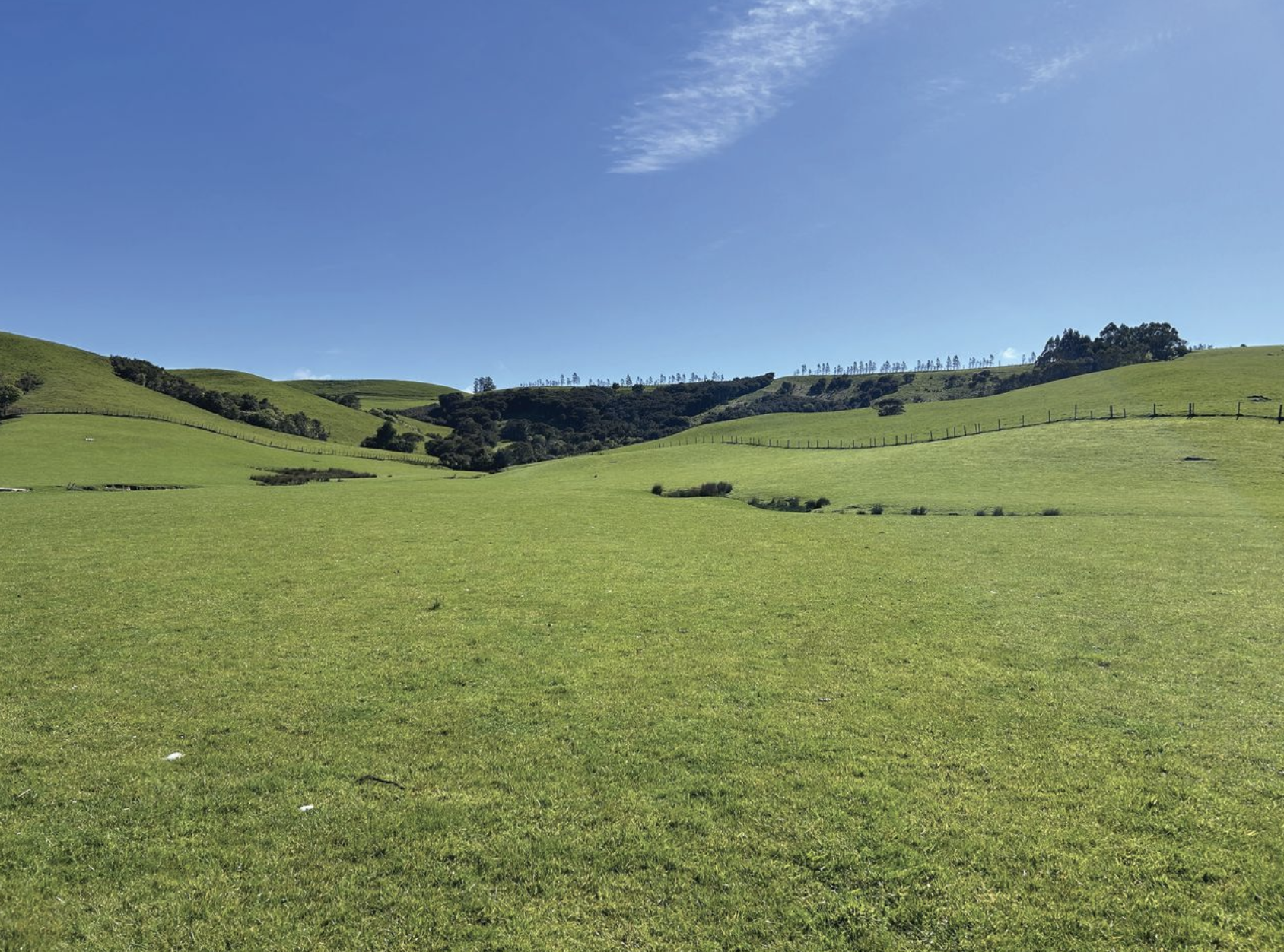
Corteva Agriscience territory manager Alysha Brick says results from a recent collaborative field day in Wairarapa have shown growers that a structured, staged programme can deliver real change.
“For farmers there is nothing quite like seeing it for themselves, seeing it in their backyard,” Brick says.
“It really brings the message home when they can see what’s been achieved and how it can work within their own farming system.”
This particular event was held on sheep and beef farmer Simon Campbell’s property near Masterton, one of the original partner farms in a nationwide Corteva and PGG Wrightson project targeting Californian thistles.
About 40 people attended, mostly farmers along with contractors and rural professionals.
“The farm was looking great after implementing the three step programme,” Brick says.
“We had everyone out in the paddock talking through what had been done and why it worked.
Probably every farmer there got a chance to ask questions and talk it through.”
Campbell’s property was put forward for the programme by PGG Wrightson technical field representative Gavin Harris.
The farm has long battled Californian thistles.
“Simon had a historical issue,” she says.
“He remembers his dad having a weed wiper on the tractor for years and they never really got on top of it.”
An initial 30 hectares has been treated so far, with another 30 ha planned over the next couple of years.
Brick says one of the strongest messages for growers is that the programme does not require treating the whole farm at once.
“That’s been a big mindset shift,” she says.
“You can start with a small area, do the whole programme properly, then move on from there.
Seeing what can be achieved in an 18 month period has really surprised people.
It’s not as hard as they thought.”
The word’s spreading further than the lower North Island, however.
At a recent Southland field day on a sheep and beef farm near Mataura, Corteva technical specialist Morgan Mansell says interest was just as high.
“We had over 40 people there, which was awesome,” Mansell says.
“It’s a massive problem and a lot of people have been trying to control it for years, spending a lot of money and getting frustrated.”
The Mataura farm paddock chosen for the demonstration had such severe thistle pressure it needed to be regrassed, and was a perfect candidate for the programme.
After just one spray of Tordon PastureBoss, thistle density dropped from an average of 29 stems per square metre down to about two.
“That’s after one spray and the programme isn’t even finished yet,” Mansell says.
“The increase in pasture utilisation has been massive.”
She says one of the key risks is stopping too early.
“With two stems per square metre, a lot of people would say that’s good enough and walk away.
That’s where it all starts to fall over.
This is the most vital point to continue the programme and really finish the job.”
Education has been a major focus at the field days, particularly around how Californian thistles behave below ground.
“The root system can go down 2.5 metres,” Mansell says.
“If you’re topping, you’re just encouraging more shoots.
You need chemistry that gets down into the roots.
Tordon PastureBoss does that, it travels down into the growth nodes, stopping the shoots coming back.”
The field days form part of a wider national project launched 12 months ago by Corteva and PGG Wrightson, involving seven case study farms across the North and South Islands.
Farmers follow a three spray programme over 18 months, with detailed monitoring of thistle density, clover content and pasture recovery.
Brick says enquiry has increased sharply, particularly in Wairarapa.
“Gavin has been really busy with new and existing enquiries,” she says.
“The message is simple.
You need to deal with your Calis, and there is actually a programme out there that works.”
Corteva and PGG Wrightson plan to continue the programme, with more farms expected to join this season and further open days likely as final results are compiled.